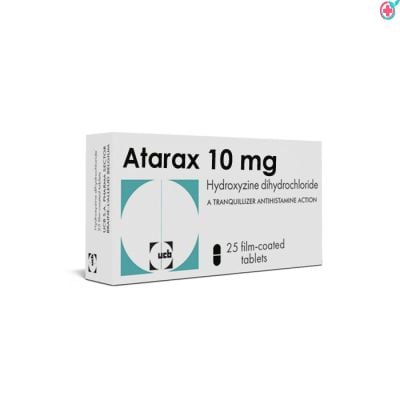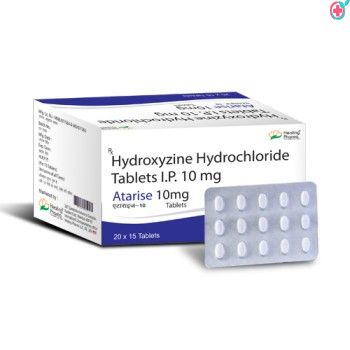
Atarax Injection (Hydroxyzine Injection) Used to Reduce Anxiety, Tension, Skin Allergies, and Sedation
Atarax Injection contains Hydroxyzine, a fast-acting antihistamine used to reduce nervousness, emotional tension, and short-term anxiety management, preoperative/postoperative sedation, and managing allergic reactions.


Product Overview
Atarax Injection contains Hydroxyzine Hydrochloride, a first-generation antihistamine with sedative and anxiolytic properties. It acts primarily by suppressing activity in specific regions of the subcortical area of the central nervous system (CNS). Atarax Injection is widely utilized in clinical settings for its ability to provide rapid relief from anxiety, tension, and psychomotor agitation, as well as for its role in preoperative and postoperative sedation.
Product Composition
- Active Ingredient: Hydroxyzine Hydrochloride (typically provided as a sterile solution for intramuscular administration).
- Mechanism: Antihistamine (H1 receptor antagonist) and CNS depressant.
- Form: Sterile injectable solution for professional healthcare use only.
Product Specifications
| Feature | Details |
| Brand Name | Atarax Injection |
| Generic Name | Hydroxyzine Hydrochloride |
| Therapeutic Category | Antihistamine / Anxiolytic / Sedative |
| Primary Use | Management of anxiety, tension, and preoperative/postoperative sedation |
Mechanism of Action
- Antihistaminic Activity: Hydroxyzine competitively antagonizes H1 receptors in the peripheral and central nervous systems, which contributes to its anti-itch (antipruritic) and mild sedative effects.
- CNS Depression: It exerts a calming effect by depressing activity in the subcortical regions of the brain, which effectively reduces feelings of anxiety and emotional tension.
- Antiemetic Property: It possesses mild antiemetic effects, which can be beneficial in managing nausea associated with surgical procedures.
- Potentiation: Hydroxyzine has the ability to potentiate the effects of certain other CNS depressants, such as opioids or barbiturates, allowing for reduced dosages of these medications when used in combination under medical supervision.
Key Benefits
- Rapid Onset: Intramuscular administration provides a faster onset of action compared to oral forms, making it ideal for acute management of anxiety.
- Versatility: Addresses multiple clinical needs, including calming agitated patients and serving as a valuable adjunct to anesthesia.
- Reduced Nausea: Helps mitigate postoperative nausea and vomiting.
Precautions
Medical Supervision
- Atarax Injection (Hydroxyzine) must be administered only by a qualified healthcare professional
- Do not self-administer under any circumstances
- Use only in a clinical or hospital setting
Dosage and Administration
- Dose and rate of injection should be strictly as prescribed
- Intramuscular or intravenous use should be performed with proper technique
- Monitor patient during and after administration for adverse reactions
Sedation and CNS Effects
- May cause drowsiness, dizziness, or sedation
- Patients should avoid driving or operating machinery after administration
- Alcohol and other CNS depressants should be avoided
Respiratory and Cardiac Caution
- Use with caution in patients with respiratory disorders such as asthma or COPD
- Caution in patients with heart rhythm disorders (QT prolongation risk)
- Continuous monitoring may be required in high-risk patients
Allergy and Sensitivity
- Do not use in patients with known hypersensitivity to hydroxyzine or similar antihistamines
- Discontinue immediately if severe allergic reaction occurs
Special Populations
- Use in elderly patients with caution due to increased sensitivity
- Pregnant and breastfeeding women should use only if clearly prescribed
- Pediatric use must be strictly supervised
| Precaution Type | Recommendation |
|---|---|
| Administration | Only by healthcare professionals |
| CNS effects | May cause sedation and drowsiness |
| Alcohol use | Strictly avoid |
| Cardiac risk | Monitor in heart conditions |
| Respiratory risk | Use cautiously in asthma/COPD |
| Monitoring | Observe for adverse reactions during use |
Usage
Atarax Injection (Hydroxyzine Hydrochloride) is a potent pharmaceutical agent intended exclusively for intramuscular administration by qualified medical personnel. Due to its sedative and CNS-depressant effects, precise dosing and patient monitoring are mandatory.
Administration Guidelines
Route: Must be administered via deep intramuscular injection. Do not administer intravenously, subcutaneously, or intra-arterially, as this can cause severe tissue damage, necrosis, or hemolysis.
Site Selection: Inject into a large muscle mass, such as the upper outer quadrant of the gluteus maximus or the mid-lateral aspect of the thigh, using a standard aseptic technique.
Dosing: Dosage must be individualized based on the patient's age, weight, clinical status, and the desired therapeutic effect. Healthcare providers must follow the specific protocols established by clinical guidelines.
Patient Monitoring: Continuous observation of the patient's respiratory status, blood pressure, and level of consciousness is required following administration due to the risk of additive sedation.
Administration Summary
| Instruction | Recommended Action |
| Administration Route | Deep intramuscular injection only |
| Safety Warning | Strictly no IV, SC, or intra-arterial injection |
| Observation | Monitor vital signs and level of consciousness |
| Facility | Clinical or hospital setting by professional staff |
Uses
Preoperative Sedation: Used as an adjunct to anesthesia to alleviate anxiety and tension before surgical procedures, facilitating a smoother transition for the patient.
Postoperative Management: Helps manage agitation and discomfort in the immediate postoperative period and assists in controlling nausea and vomiting.
Acute Anxiety Relief: Provides rapid symptomatic relief for patients experiencing acute emotional tension, anxiety, or psychomotor agitation.
Adjunct Therapy: Used in conjunction with other CNS depressants (like opioids) to potentiate therapeutic effects, often allowing for reduced dosages of more potent analgesics under strict clinical supervision.
Side effects
Common Side Effects
- Drowsiness or sedation
- Dizziness
- Dry mouth
- Headache
- Fatigue or weakness
Less Common Side Effects
- Blurred vision
- Constipation
- Confusion (more common in elderly patients)
- Nausea
- Restlessness or mild agitation (rare)
Serious Side Effects
| Serious Side Effect | Symptoms | What to Do |
|---|---|---|
| Severe allergic reaction | Rash, swelling, difficulty breathing | Stop use and seek emergency care |
| Heart rhythm disturbances (QT prolongation) | Irregular heartbeat, fainting, dizziness | Immediate medical attention required |
| Severe CNS depression | Extreme drowsiness, reduced consciousness | Urgent medical evaluation |
| Seizures (rare) | Convulsions or loss of consciousness | Emergency care needed |
| Severe confusion | Disorientation, agitation, hallucinations | Consult doctor immediately |
Monitoring
Sedation Monitoring
- Observe level of drowsiness after injection
- Ensure patient safety due to reduced alertness
Cardiac Monitoring
- Monitor heart rate and rhythm in high-risk patients
- Watch for palpitations or irregular heartbeat
Respiratory Monitoring
- Observe breathing patterns, especially in sedated patients
- Extra caution in patients with respiratory disorders
General Safety Monitoring
- Watch for allergic reactions during and after administration
- Discontinue or adjust treatment if severe side effects occur
FAQs of Atarax Injection
Q. How is Atarax Injection administered?
It is given as an intramuscular (IM) injection by a healthcare professional. It should not be administered intravenously or subcutaneously.
Q. How quickly does it work?
Effects usually begin within 15–30 minutes after injection, providing rapid relief from anxiety or allergic symptoms.
Q. Can I drive after taking Atarax Injection?
No. It may cause drowsiness or dizziness, impairing your ability to drive or operate machinery.
Q. Is it addictive?
No, Hydroxyzine is not habit-forming or addictive, unlike some other anti-anxiety medications.
Q. Can it be used for children?
Yes, but only under the supervision of a doctor and with age-appropriate dosing.
Q: What is Atarax Injection used for?
A: Atarax Injection is primarily used for the symptomatic relief of anxiety and tension, and as an adjunct for sedation during the preoperative and postoperative periods.
Q: Is Atarax Injection available for home use?
A: No, Atarax Injection is a sterile preparation intended for administration exclusively by qualified healthcare professionals in a clinical or hospital setting.
Q: How does Atarax work to reduce anxiety?
A: Hydroxyzine works by suppressing activity in specific, key subcortical areas of the central nervous system, which helps to produce a calming effect and reduce emotional agitation.
Q: How long does the sedative effect last?
A: The duration of the sedative effect can vary based on the dosage administered and individual patient response. Healthcare providers will monitor the patient closely during and after administration to assess the level of sedation.
Q: Can it be used to treat nausea?
A: Yes, it possesses mild antiemetic properties, which can be useful in managing nausea and vomiting during the postoperative period when used as directed by a physician.
Q: Are there significant side effects to watch for?
A: The most common side effects include drowsiness, dry mouth, and dizziness. Because it is a CNS depressant, patients are monitored for excessive sedation or respiratory issues, especially when used in conjunction with other medications like opioids.
Q: Can I drive or operate machinery after receiving this injection?
A: No. Because this medication causes significant sedation and impairs cognitive and motor functions, you must strictly avoid driving or operating machinery for a period specified by your doctor after receiving the injection.
Q: Can I receive this injection if I am taking other medications?
A: It is critical that your healthcare provider is aware of all other medications you are taking, especially other sedatives, tranquilizers, or opioids, as Atarax can potentiate (increase) their effects, requiring careful dose adjustment.
Interactions
CNS Depressants (Sedatives, Alcohol, Sleep Medications)
- Atarax Injection (Hydroxyzine) may enhance sedative effects when used with alcohol, benzodiazepines, opioids, or sleeping pills
- Can cause excessive drowsiness, dizziness, or respiratory depression
- Concurrent use should be strictly monitored or avoided
Anticholinergic Drugs
- Combining with other anticholinergic medicines may increase side effects like dry mouth, blurred vision, constipation, and confusion
- Use with caution, especially in elderly patients
QT-Prolonging Medicines
- Hydroxyzine may increase risk of heart rhythm disturbances when combined with QT-prolonging drugs
- Examples include certain antiarrhythmics, antibiotics, and antipsychotics
- ECG monitoring may be required in high-risk patients
CNS Stimulants
- Stimulant medications may reduce the sedative effect of hydroxyzine
- May affect expected therapeutic response
Other Antihistamines
- Avoid using with additional antihistamines unless prescribed
- May increase side effects such as sedation and dryness without added benefit
Anesthetic Agents
- May enhance sedative effects when used before or during anesthesia
- Requires dose adjustment and monitoring in surgical settings
| Interacting Drug Type | Possible Effect | Recommendation |
|---|---|---|
| Alcohol/CNS depressants | Excess sedation, respiratory risk | Avoid combination |
| Anticholinergics | Increased side effects | Use with caution |
| QT-prolonging drugs | Heart rhythm risk | Monitor ECG if needed |
| Other antihistamines | Increased drowsiness | Avoid unless prescribed |
| Anesthetics | Enhanced sedation | Medical supervision required |
| Stimulants | Reduced sedative effect | Monitor response |
| Manufacturer | : | Dr. Reddy Lab, India |
| Trade Name | : | Vistaril |
| Generic Search | : | Hydroxyzine HCl |
| Strength | : | 25mg |
Certified Content

Dr. Priya Nair
Clinical Pharmacist & Senior Drug Information Specialist | 9 years
Pharm.D. (Doctor of Pharmacy)
Latest Products