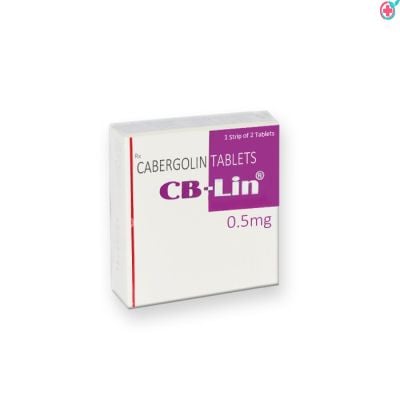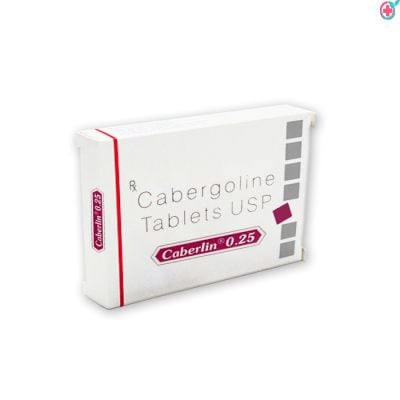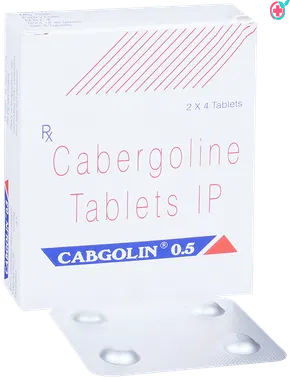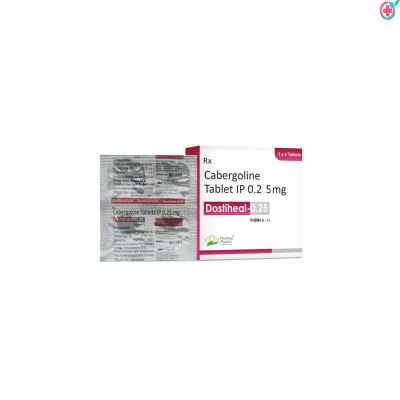
Cabgolin Tablet (Cabergoline) | Dostinex | Used to Treat High Prolactin Levels and Stop Unwanted Milk Production
Cabgolin, also known by its generic name Cabergoline, is used to treat hyperprolactinemia, suppress breast milk secretion, and manage associated complications like irregular menstruation and fertility issues.


Product Overview
Cabgolin Tablet is primarily associated with high levels of the hormone prolactin (hyperprolactinemia), it helps restore hormonal balance, improve fertility issues, and manage conditions like pituitary prolactinoma by reducing excess prolactin production under medical supervision. It is a highly effective medication containing Cabergoline, a potent dopamine receptor agonist. By mimicking the action of dopamine in the brain, Cabgolin 0.25/0.5 mg works directly on the pituitary gland to inhibit the overproduction of prolactin, thereby restoring hormonal balance.
As a long-acting ergot derivative, this medication is a primary choice for managing pituitary adenomas (prolactin-secreting tumors) and associated reproductive health issues. Cabergoline tablets are recognized for their high affinity for D2 receptors, providing a sustained therapeutic effect that allows for infrequent dosing schedules while effectively resolving symptoms like irregular periods, infertility, and unwanted breast milk production.
Product Composition
The formulation of Cabgolin is engineered for precise hormonal regulation through its active pharmaceutical ingredient.
- Active Ingredient: Cabergoline (commonly available in 0.25 mg and 0.5 mg strengths).
- Chemical Class: Dopamine Agonist (Ergot derivative).
- Inactive Ingredients: Typically includes Leucine and Lactose anhydrous to ensure tablet stability and consistent release.
- Formulation: Designed for oral administration with a focus on high intestinal absorption and a long half-life.
Product Specification
| Feature | Details |
| Brand Name | Cabgolin Tablet |
| Generic Name | Cabergoline |
| Drug Class | Dopamine Receptor Agonist |
| Dosage Form | Oral Tablet |
| Available Strengths | 0.25 mg and 0.5 mg |
| Primary Indication | Hyperprolactinemia and Prolactinoma |
Mechanism of Action
Cabgolin Tablet restores endocrine balance by interacting with specific neurotransmitter pathways:
- D2 Receptor Activation: Cabergoline acts as a direct agonist at the D2 dopamine receptors located on the lactotroph cells of the pituitary gland.
- Prolactin Suppression: By stimulating these receptors, it sends a powerful signal to stop prolactin secretion, which lowers the concentration of this hormone in the bloodstream.
- Tumor Shrinkage: In patients with prolactinomas, the medication can reduce the size of the pituitary tumor, alleviating pressure on surrounding brain structures.
- Gonadal Function Restoration: By normalizing prolactin levels, it removes the inhibitory effect on gonadotropins, helping to restore normal ovulation and testosterone levels.
Key Benefits
- Effective Hormone Normalization: Rapidly and reliably reduces serum prolactin levels to within the normal range.
- Infertility Treatment: Helps restore fertility in women experiencing ovulatory dysfunction and in men with low libido or sperm count due to high prolactin.
- Convenient Dosing: Due to its long-lasting effect, it usually requires only twice-weekly administration, significantly improving patient compliance.
- Symptom Resolution: Effectively stops galactorrhea (unexplained breast milk production) and resolves symptoms of hypogonadism.
- Well-Tolerated: Generally has a better tolerability profile compared to older dopamine agonists, with fewer gastrointestinal side effects during long-term therapy.
Usage
The administration of Cabgolin Tablet requires precise timing and monitoring to ensure hormonal balance is restored without causing significant side effects. Because Cabergoline has a very long half-life, it is not a daily medication.
Dosage and Administration
The Cabergoline dosage is usually started at a very low level and "titrated" (gradually increased) by a doctor based on blood tests measuring serum prolactin levels.
| Treatment Phase | Typical Dosage | Frequency |
| Initial Dose | 0.25 mg | Twice per week (e.g., Monday and Thursday) |
| Dose Escalation | Increased by 0.25 mg increments | Every 4 weeks until target reached |
| Maintenance Dose | 0.5 mg to 1.0 mg | Twice per week |
How to Take Cabgolin Tablet:
With Food: To reduce the risk of nausea or dizziness, it is highly recommended to take your Cabgolin dose with a meal.
Weekly Schedule: Choose two specific days of the week and stay consistent. This helps maintain stable dopamine agonist activity in the pituitary gland.
Avoid Alcohol: Consuming alcohol while on this medication can increase the risk of side effects like postural hypotension (dizziness when standing up).
Monitoring: Regular blood tests are required to check prolactin concentration. Once levels are normal for six months, a physician may consider tapering the dose.
Missed Dose: If you miss a dose, take it as soon as you remember unless it is nearly time for the next scheduled dose. Never double the dose.
Storage and Handling
Moisture Sensitivity: Keep tablets in the original blister or a tightly sealed container. Cabergoline can degrade if exposed to moisture.
Temperature: Store in a cool, dry place below 25°C.
Child Safety: Ensure the medication is stored securely, as even a small amount of hormonal medication can be harmful to children.
Uses
Cabgolin (Cabergoline) is the primary clinical intervention for disorders involving the hypothalamic-pituitary axis and prolactin overproduction.
Primary Indications
Hyperprolactinemia Treatment: Used to treat high levels of prolactin caused by unknown factors or pituitary tumors.
Prolactin-Secreting Adenomas: Specifically indicated to shrink prolactinomas (benign tumors of the pituitary gland) and normalize hormone output.
Galactorrhea Management: Effectively stops spontaneous milk production in both men and women that is not related to breastfeeding.
Amenorrhea and Oligomenorrhea: Restores menstrual cycle regularity in women whose periods have stopped or become infrequent due to hormone imbalances.
Secondary and Off-Label Uses
Infertility Therapy: Helps restore ovulatory function in women and improves sperm quality and libido in men suffering from prolactin-induced hypogonadism.
Parkinson’s Disease: In much higher doses, it may be used as an adjunctive therapy to manage motor symptoms due to its dopaminergic activity.
Ablactation: Occasionally prescribed to suppress physiological lactation after childbirth when breastfeeding is medically contraindicated.
Acromegaly: Sometimes used in combination with other drugs to lower growth hormone levels in patients who do not respond to standard treatments.
FAQ’s
Q. Is cabergoline safe?
A. Yes. Cabergoline is safe if used at prescribed doses for the prescribed duration as advised by your doctor.
Q. Is cabergoline a monoamine oxidase inhibitor (MAOI)?
A. No. Cabergoline stimulates dopamine (D2) receptors and is used to lower high levels of prolactin in the body. It does not inhibit monoamine oxidases (MAO).
Q. Can cabergoline be used for fertility?
A. Yes. Cabergoline can be used to improve fertility in cases with high levels of prolactin. It suppresses high prolactin levels in men and women. Consult your doctor regarding the use of clomid and cabergoline for improving fertility.
Q. When is cabergoline used?
A. Cabergoline is used for conditions associated with hyperprolactinemia (excess prolactin), such as amenorrhea (absence of menstruation), oligomenorrhea (irregular menstruation), anovulation (absence of ovulation), galactorrhea (abnormal milky discharge from breasts), and fertility problems in men and women.
Q. Does cabergoline affect your periods?
A. Yes. Cabergoline can cause changes in menstrual cycles as a side effect.
Q. Does cabergoline cause hair loss, headaches, or constipation?
A. Yes. Some possible side effects of cabergoline include hair loss, headaches, and constipation.
Q. Does cabergoline increase libido?
A. Yes. Increased sexual desire is a known side effect of cabergoline.
| Manufacturer | : | Sun Pharma, India |
| Trade Name | : | Dostinex |
| Generic Search | : | Cabergoline |
| Strength | : | 0.5 mg, 0.25mg |
Certified Content

Dr. Priya Nair
Clinical Pharmacist & Senior Drug Information Specialist | 9 years
Pharm.D. (Doctor of Pharmacy)
Latest Products