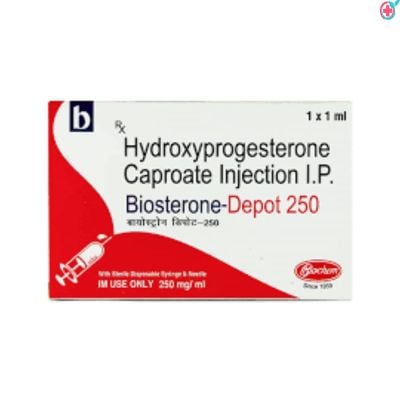
Proluton Depot Injection (Hydroxyprogesterone) Used to Reduce Miscarriage and Preterm Birth Risk
Proluton Depot Injection (Hydroxyprogesterone) is a hormonal injection used to help reduce the risk of miscarriage and preterm birth by supporting pregnancy maintenance. It helps maintain the uterine lining and supports hormonal balance essential for sustaining pregnancy.


Product Overview
Proluton Depot Injection is used to provide hormonal support during pregnancy in women who have a history of preterm birth or to treat conditions related to progesterone deficiency, such as amenorrhea (absence of menstrual periods) or dysfunctional uterine bleeding. Proluton Depot Injection contains Hydroxyprogesterone, a synthetic form of the hormone progesterone. It is primarily used to reduce the risk of miscarriage and preterm birth in women with a history of spontaneous preterm delivery or threatened miscarriage. Proluton Depot is a sterile, oily solution for intramuscular injection containing Hydroxyprogesterone Caproate, a synthetic form of the naturally occurring female hormone, progesterone. By maintaining adequate levels of progesterone, it helps stabilize the uterine lining and supports the maintenance of a healthy pregnancy.
Product Composition
- Active Ingredient: Hydroxyprogesterone Caproate.
- Drug Class: Progestin (Synthetic Progesterone).
- Formulation: Intramuscular injection (oily solution in ampoules).
- Key Characteristic: Long-acting, depot-effect formulation providing sustained release of the hormone.
Product Specification
| Feature | Details |
| Therapeutic Class | Progestogen / Hormone Replacement |
| Primary Indication | Prevention of preterm birth (high-risk patients) |
| Secondary Indication | Amenorrhea, dysfunctional uterine bleeding |
| Administration | Intramuscular (IM) injection only |
| Storage | Store at room temperature (20°C–25°C); protect from light |
Mechanism of Action
- Hormonal Supplementation: Proluton Depot replaces or supplements endogenous progesterone, which is essential for the maturation and secretory transformation of the endometrium.
- Uterine Stabilization: It promotes a "quiescent" (calm) state in the uterine muscles (myometrium) by reducing their sensitivity to substances that trigger contractions.
- Preterm Prevention: By maintaining uterine calm and supporting cervical integrity, it significantly reduces the risk of preterm labor in patients with a history of delivering before 37 weeks.
- Endometrial Regulation: In cases of menstrual irregularities, it acts to regulate the endometrial cycle and control uterine bleeding by mimicking the luteal phase of the menstrual cycle.
Key Benefits
- Pregnancy Support: Provides a proven pharmacological strategy to extend pregnancy duration in high-risk patients, helping to improve neonatal outcomes.
- Depot Effect: The oily base ensures a slow, sustained release of the hormone, reducing the frequency of injections required compared to daily oral or shorter-acting formulations.
- Proven Therapeutic Efficacy: Widely recognized in obstetric practice for its role in managing patients at risk for spontaneous preterm birth.
- Cycle Regulation: Highly effective in normalizing hormonal imbalances that cause long-term menstrual irregularities.
- Targeted Administration: Intramuscular delivery ensures predictable absorption, bypassing the variability often seen with oral absorption or first-pass metabolism.
Precautions
Important precautions for Proluton Depot Injection (Hydroxyprogesterone)
Pregnancy and medical supervision
- Use only under strict medical supervision during pregnancy
- Follow exact dosing schedule as prescribed
- Not intended for self administration without guidance
- Regular prenatal monitoring is required
Blood clot and cardiovascular precautions
- Use cautiously in patients with history of blood clots
- May increase risk of thromboembolic events in some individuals
- Report symptoms like leg swelling, chest pain, or shortness of breath immediately
- Avoid prolonged immobility during treatment
Liver and metabolic precautions
- Use cautiously in patients with liver disorders
- Monitor liver function during prolonged therapy
- May affect glucose tolerance in some patients
- Diabetic patients require blood sugar monitoring
Hormonal and mental health precautions
- May cause mood changes or depression in some individuals
- Inform doctor about history of psychiatric conditions
- Hormonal sensitivity may vary between individuals
- Monitor for unusual emotional or behavioral changes
General usage precautions
- Injection should be administered by healthcare professional
- Do not miss scheduled doses for effectiveness
- Inform doctor about all ongoing medications
- Store and handle as per medical instructions
Safety overview table
| Area of caution | Precaution guidance |
|---|---|
| Pregnancy care | Strict medical supervision required |
| Blood clot risk | Monitor for thromboembolic symptoms |
| Liver function | Use cautiously in liver disease |
| Hormonal effects | Monitor mood and behavioral changes |
Usage
Dosage
Dosage and frequency are strictly determined by your physician based on the specific condition being treated. For pregnancy support, consistency is vital to achieving the intended therapeutic effect.
| Indication | Typical Dosage/Frequency |
| Prevention of Preterm Birth | 250 mg via IM injection once weekly |
| Amenorrhea/Uterine Bleeding | Determined individually by physician |
Administration
Professional Administration: Proluton Depot must be administered via intramuscular (IM) injection by a trained healthcare professional.
Injection Site: It is typically injected into the upper outer quadrant of the buttock to ensure deep muscle absorption.
Consistency: When used for pregnancy support, injections must be received on a strict weekly schedule to maintain constant hormone levels.
Storage: Keep the ampoules stored at room temperature, protected from light. If stored in a cool place, crystals may form; warming the ampoule gently between your palms usually restores the solution.
Injection Site Care: You may experience mild discomfort or bruising at the site. Applying a warm compress can often help alleviate local soreness.
Missed Dose: Contact your doctor immediately if you miss a scheduled injection, as missing doses can significantly reduce the efficacy of the treatment.
Uses
Prevention of Recurrent Preterm Birth: Indicated for use in pregnant women with a documented history of singleton spontaneous preterm birth to reduce the risk of recurring preterm delivery.
Management of Amenorrhea: Used to induce withdrawal bleeding in women with secondary amenorrhea (the absence of menstrual periods) due to hormonal imbalances.
Dysfunctional Uterine Bleeding: Helps control and regulate abnormal uterine bleeding caused by hormonal fluctuations rather than structural abnormalities.
Uterine Quiescence: Promotes a calm, inactive state in the uterine muscles, which is essential for supporting a pregnancy until full term.
Endometrial Support: Aids in the secretory transformation of the endometrium, which is necessary for hormonal health and cycle regulation.
Hormonal Balance: Supplements endogenous progesterone levels, helping to restore balance in patients with documented progesterone deficiency.
Side effects
Common side effects
- Injection site pain or swelling
- Headache
- Nausea
- Fatigue or weakness
Hormonal effects
- Mood changes or irritability
- Breast tenderness
- Changes in menstrual pattern (if used outside pregnancy)
- Fluid retention or mild swelling
Gastrointestinal effects
- Bloating
- Abdominal discomfort
- Loss of appetite
- Mild constipation
Less common side effects
- Dizziness
- Skin rash or itching
- Sleep disturbances
- Weight changes
Serious side effects (rare)
- Blood clots (leg pain, chest pain, shortness of breath)
- Severe allergic reactions
- Liver dysfunction (yellowing of skin or eyes)
- Severe depression or mood disturbances
Side effects summary table
| System affected | Possible reaction |
|---|---|
| Injection site | Pain, swelling, irritation |
| Nervous system | Headache, dizziness, fatigue |
| Hormonal | Mood changes, breast tenderness |
| Gastrointestinal | Nausea, bloating, discomfort |
| Serious risks | Blood clots, liver issues, allergic reactions |
FAQs
Q: What is Proluton Depot used for?
A: It is primarily used to help prevent preterm birth in women with a history of delivering early. It is also used to treat hormonal conditions like amenorrhea (absence of periods) and irregular uterine bleeding.
Q: How is this medication administered?
A: Proluton Depot is administered as an intramuscular (IM) injection. This must be performed by a healthcare professional, typically into the upper outer quadrant of the buttock.
Q: Why is it called "Depot"?
A: The "Depot" formulation is designed to be released slowly from the injection site into your bloodstream over time. This allows for a sustained hormonal effect without needing daily injections.
Q: What are the common side effects?
A: You may experience pain, swelling, or itching at the injection site. Other potential side effects include nausea, headache, breast tenderness, or mild mood changes.
Q: Does this replace natural progesterone?
A: It acts in a very similar way to the natural progesterone produced by your body. It helps "calm" the uterus and supports the maintenance of the uterine lining.
Q: Can I stop the injections once I feel better?
A: No. It is critical to follow the exact injection schedule provided by your obstetrician or doctor. Stopping prematurely could reduce the effectiveness of the treatment, especially for pregnancy support.
Q: How long does the treatment last during pregnancy?
A: For the prevention of preterm birth, treatment is usually started during the second trimester (often between 16 and 20 weeks) and continued weekly until the 36th or 37th week of pregnancy, or until birth.
Q: Are there any serious warning signs to watch for?
A: Contact your doctor immediately if you experience severe headaches, vision changes, signs of a blood clot (like sudden leg pain or swelling), or signs of an allergic reaction (like rash or difficulty breathing).
Interactions
Drug interactions of Proluton Depot Injection (Hydroxyprogesterone)
Hormonal medicines
- Other progesterone or estrogen therapies may enhance hormonal effects
- Hormonal contraceptives may alter overall hormone balance
- Combined hormone therapy requires careful medical supervision
- Endocrine treatments may need dose adjustments
Liver enzyme affecting medicines
- Enzyme inducers (e.g., certain anticonvulsants, antibiotics) may reduce effectiveness
- Enzyme inhibitors may increase hormone levels and side effects
- Drugs affecting liver metabolism can alter response to therapy
Blood clot related medicines
- Anticoagulants may have altered effectiveness
- Risk of clotting may increase with certain medications
- Monitoring is required in patients on blood thinners
Diabetes related medicines
- May affect blood glucose levels
- Antidiabetic medicines may require dose adjustment
- Regular blood sugar monitoring is recommended
General medication considerations
- Herbal supplements may affect hormone metabolism
- Alcohol may worsen side effects and should be limited
- Always inform doctor about all medications being taken
Drug interactions table
| Drug class | Interaction effect |
|---|---|
| Hormonal therapies | Enhanced or altered hormonal effects |
| Enzyme inducers | Reduced effectiveness |
| Enzyme inhibitors | Increased hormone levels and side effects |
| Anticoagulants | Altered clotting response |
| Antidiabetic drugs | Blood sugar level changes |
| Manufacturer | : | Zydus Cadila |
| Trade Name | : | Proluton Depot |
| Generic Search | : | Hydroxyprogesterone |
| Strength | : | 250 mg, 500mg |
Certified Content

Dr. Priya Nair
Clinical Pharmacist & Senior Drug Information Specialist | 9 years
Pharm.D. (Doctor of Pharmacy)
Latest Products