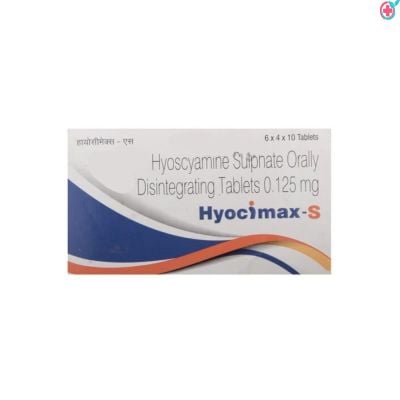
Hyocimax-S Injection (Hyoscyamine) | Used for Abdominal Cramps and Gastrointestinal Spasm Relief
Hyocimax-S Injection (Hyoscyamine) is a medication primarily used to relieve symptoms associated with gastrointestinal disorders, including abdominal cramps, peptic ulcers, and other conditions that cause muscle spasms in the digestive tract.


Product Overview
Hyocimax-S Injection is a high-potency antispasmodic and anticholinergic medication formulated to provide rapid relief from severe smooth muscle spasms within the gastrointestinal, biliary, and genitourinary tracts. Containing the active therapeutic compound Hyoscyamine (as hyoscyamine sulfate), this sterile injection works by blocking the action of acetylcholine on smooth muscles, glands, and the central nervous system. Hyocimax-S is primarily utilized in acute clinical or emergency settings to control painful spasms associated with irritable bowel syndrome, peptic ulcers, diverticulitis, and biliary or renal colic. It is also an essential clinical tool used to reduce secretions and suppress vagal reflexes during pre-anesthetic procedures or diagnostic examinations.
Product Composition
- Active Pharmaceutical Ingredient: Hyoscyamine Sulfate (0.5mg per mL of solution)
- Dosage Form: Clear, colorless, sterile solution optimized for rapid parenteral delivery
- Core Excipients: Formulated in Water for Injection, with sodium chloride added to ensure isotonicity and dilute hydrochloric acid or sodium hydroxide utilized strictly for pH stabilization
Product Specification
| Product Parameter | Details |
| Brand Name | Hyocimax-S Injection |
| Active Ingredient | Hyoscyamine Sulfate |
| Therapeutic Class | Anticholinergics / Antispasmodics (Belladonna alkaloids) |
| Available Strength | 0.5mg / mL |
| Primary Indications | Acute smooth muscle spasms, gastrointestinal motility disorders, renal/biliary colic, and pre-anesthetic secretion control |
Mechanism of Action
- Competitive Muscarinic Antagonism: Hyoscyamine acts as a highly targeted, competitive antagonist at postganglionic muscarinic receptors located throughout smooth muscles, cardiac muscle, and exocrine gland cells.
- Inhibition of Parasympathetic Signalling: By preventing acetylcholine from binding to these specific receptors, it effectively blocks parasympathetic nerve impulses.
- Reduction of Spasms and Secretions: This inhibition directly decreases hyper-motility and relaxes smooth muscle tissues in the stomach, intestines, ureters, and bile ducts. Simultaneously, it drastically downregulates salivary, bronchial, and gastric secretions while slightly accelerating the baseline heart rate.
Key Benefits
- Delivers exceptionally rapid, targeted relief from severe, debilitating visceral pain caused by acute gastrointestinal or renal spasms.
- Provides valuable multi-route administration flexibility, allowing clinicians to choose subcutaneous, intramuscular, or intravenous delivery based on case urgency.
- Functions effectively as a pre-anesthetic medication to dry up excessive respiratory and salivary secretions, maintaining clear airways during surgical procedures.
- Serves as a reliable diagnostic aid to temporarily stop gastrointestinal motility during endoscopic or radiological procedures, improving imaging clarity.
Precautions
Important Precautions for Hyocimax-S Injection (Hyoscyamine)
Hyocimax-S Injection is used to relieve gastrointestinal and urinary spasms. Careful use is important due to its anticholinergic effects.
| Precaution Area | Details |
|---|---|
| Heart Conditions | Use with caution in heart disease. |
| Glaucoma | May worsen eye pressure. |
| Urinary Retention | Can increase difficulty in urination. |
| Elderly Patients | Higher risk of confusion or side effects. |
| Heat Sensitivity | May reduce sweating and heat tolerance. |
| Liver or Kidney Issues | Use carefully in organ impairment. |
| Gastrointestinal Blockage | Avoid in suspected obstruction. |
Important Safety Advice
- Do not exceed recommended dose
- Avoid alcohol during treatment
- Use only as directed for short-term relief
- Report confusion or vision changes immediately
- Stay hydrated and avoid overheating
When to Avoid Hyocimax-S Injection
- Narrow-angle glaucoma
- Severe urinary retention
- Intestinal obstruction
- Known hypersensitivity to Hyoscyamine
Monitoring Requirements
- Heart rate monitoring if needed
- Eye pressure evaluation in risk patients
- Mental status observation in elderly
- Response to spasm relief therapy
Usage
This high-potency antispasmodic must be administered by a qualified healthcare professional. Dosage must be strictly individualized based on the patient's age, weight, and the severity of the smooth muscle spasm. Because it carries potent anticholinergic risks, clinicians must check the patient's intraocular pressure and urinary function before administration, while keeping a close eye on heart rate fluctuations during intravenous delivery.
| Parameter | Clinical Guidelines |
| Parenteral Dosage | The typical adult dose ranges from 0.25mg to 0.5mg (0.5 to 1 mL) administered as a single dose. This may be repeated up to 4 times a day at 4-hour intervals if clinically necessary. |
| Administration Route | Can be given via subcutaneous (SC), intramuscular (IM), or intravenous (IV) injection depending on how quickly the spasm needs to be controlled. |
| Drug Compatibility | The solution should be inspected visually for particulate matter or discoloration prior to administration. Do not mix with incompatible alkaline solutions in the same syringe. |
| Precautions in Heat | Administer with extreme caution in hot environments. Hyoscyamine suppresses sweat gland activity, which can rapidly lead to heat prostration or hyperthermia (fever). |
Uses
Relief of Acute Visceral Spasms: Indicated for the immediate control of severe, painful spasms affecting the gastrointestinal tract, biliary tree, and urinary bladder.
Management of Renal and Biliary Colic: Utilized in emergency settings to relax smooth muscle tissue in the ureters or bile ducts, easing the passing of stones and relieving intense visceral pain.
Pre-Anesthetic Secretion Suppression: Prescribed prior to surgical procedures to significantly reduce excessive salivary, tracheobronchial, and pharyngeal secretions, maintaining airway patency.
Diagnostic Gastrointestinal Immobilization: Employed as a diagnostic aid during endoscopy, colonoscopy, or radiological imaging to temporarily stop hyper-motility, allowing for clearer visualization.
FAQs
Q: What is Hyocimax-S Injection used for?
A: This fast-acting anticholinergic medication is used to provide rapid relief from severe spasms of the smooth muscles in the stomach, intestines, bladder, and kidneys. It is frequently prescribed for acute visceral pain from renal or biliary colic, irritable bowel syndrome (IBS), and peptic ulcers, as well as to reduce bodily secretions before surgery.
Q: How does Hyoscyamine relieve muscle spasms?
A: It works as a competitive antagonist that blocks muscarinic acetylcholine receptors. By stopping acetylcholine from binding to these sites, it dampens parasympathetic nerve signals, which relaxes cramped muscles and decreases the overproduction of gastric and salivary secretions.
Q: Through which routes can Hyocimax-S be administered?
A: This versatile sterile solution can be given via subcutaneous (SC), intramuscular (IM), or intravenous (IV) injection. The chosen route depends on the severity of the patient's spasms and how rapidly clinical stabilization is needed.
Q: What are the primary contraindications for this injection?
A: It must not be given to patients with narrow-angle glaucoma, as blocking acetylcholine can dangerously elevate intraocular pressure. It is also contraindicated in patients with urinary retention, benign prostatic hyperplasia (BPH), or severe gastrointestinal obstructions like paralytic ileus.
Q: What are the typical anticholinergic side effects?
A: Common reactions include dry mouth (xerostomia), blurred vision due to dilated pupils, constipation, a rapid heart rate (tachycardia), flushing, and difficulty urinating. In elderly individuals, it can occasionally trigger temporary confusion or agitation.
Q: Is it safe to drive after receiving this medication?
A: No. Because hyoscyamine frequently causes blurred vision, dizziness, and mild drowsiness, patients should not drive, operate machinery, or participate in hazardous activities until the medication's effects have completely worn off.
Interactions
Drug Interactions of Hyocimax-S Injection (Hyoscyamine)
Hyocimax-S Injection may interact with medicines that have anticholinergic effects or act on the central nervous system. These combinations can increase side effects such as dryness, confusion, and heart rate changes.
| Medicine or Product Type | Interaction Details |
|---|---|
| Antihistamines | May increase dryness and drowsiness. |
| Antidepressants | Can enhance anticholinergic effects. |
| Antipsychotics | May increase confusion or sedation. |
| Other Antispasmodics | Can intensify side effects. |
| Opioid Painkillers | May increase constipation and sedation. |
| Muscle Relaxants | Can increase weakness and drowsiness. |
Important Interaction Advice
- Avoid combining multiple anticholinergic medicines
- Inform about all ongoing psychiatric and pain medications
- Use caution when taking sedative drugs
- Monitor for confusion, dry mouth, or fast heartbeat
General Guidance
- Dose adjustments may be needed in combination therapy
- Elderly patients require extra monitoring
- Report severe dizziness or mental confusion
- Avoid self-medication with overlapping symptom drugs
Additional Note
- Always provide a complete medication history to reduce risk of interactions and side effects
| Manufacturer | : | Zydus Cadila |
| Trade Name | : | Levsin |
| Generic Search | : | Hyoscyamine |
| Strength | : | 0.5mg |
Certified Content

Dr. Priya Nair
Clinical Pharmacist & Senior Drug Information Specialist | 9 years
Pharm.D. (Doctor of Pharmacy)
Latest Products