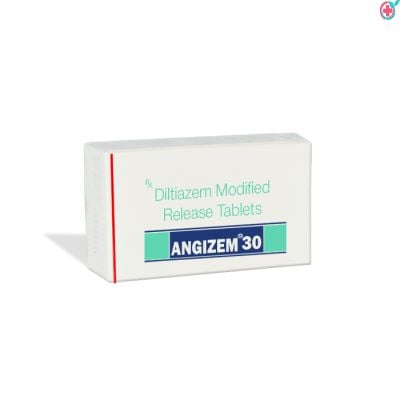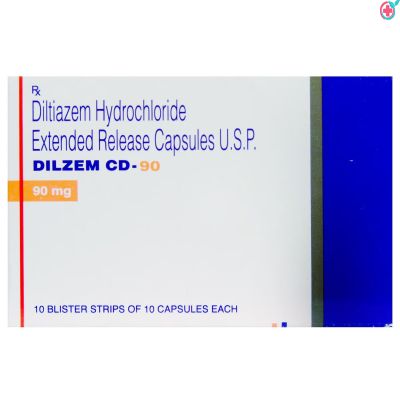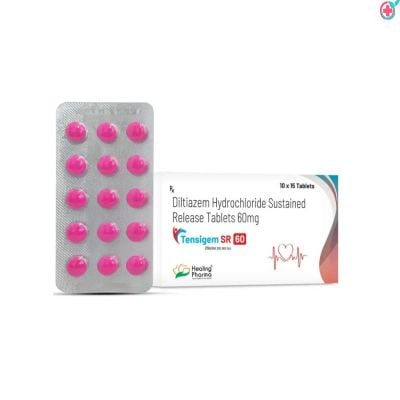
Dilzem IV Injection (Diltiazem) Used to Treat Mild to Moderate Hypertension, Arrhythmia, and Prevent Angina
Dilzem IV Injection is used to treat high blood pressure, angina, and certain heart rhythm disorders. It contains Diltiazem hydrochloride, a medicine belonging to the class of calcium channel blockers.
It is mainly used in hospital settings and is intended for adults who need rapid control of certain heart rhythm disturbances or high heart rate.
Dilzem IV is typically administered by a healthcare professional, ensuring close monitoring during treatment.


Product Overview
Dilzem IV Injection is a cardiovascular medication used for the rapid management of specific heart rhythm disorders and acute hypertensive episodes like high blood pressure, angina. Containing Diltiazem, a calcium channel blocker, this injectable solution is designed for emergency or hospital settings where immediate control of heart rate is required. It works by relaxing the muscles of the heart and blood vessels, ensuring the heart does not work over-exclusively while stabilizing the pulse.
Product Composition
The clinical effectiveness of this injection is driven by its active pharmacological agent:
- Diltiazem Hydrochloride: A benzothiazepine derivative that acts as a potent calcium ion influx inhibitor (slow channel blocker).
Product Specification
| Feature | Details |
| Therapeutic Class | Calcium Channel Blocker (Class IV Antiarrhythmic) |
| Dosage Form | Sterile Injectable Solution |
| Administration | Intravenous (IV) Bolus or Continuous Infusion |
| Primary Indication | Atrial Fibrillation, Atrial Flutter, and Paroxysmal Supraventricular Tachycardia (PSVT) |
| Storage | Store in a refrigerator; do not freeze |
Mechanism of Action
Dilzem IV works by modulating the movement of calcium ions into the specialized conduction tissue of the heart and the smooth muscle of the arteries:
- Electrophysiological Regulation: It slows the conduction of electrical impulses through the Atrioventricular (AV) node. This directly reduces the rapid heart rate associated with various arrhythmias.
- Vasodilation: By inhibiting calcium influx into the smooth muscle of blood vessels, it promotes the relaxation of the coronary and systemic arteries. This lowers peripheral resistance and reduces blood pressure.
- Myocardial Protection: It decreases the oxygen demand of the heart by lowering the heart rate and the force of contraction, which is vital during acute cardiac stress.
- Interruption of Reentry: In cases of PSVT, it helps break the rapid "looping" electrical signals, allowing the heart to return to a normal sinus rhythm.
Key Benefits
- Rapid Onset of Action: Provides immediate intervention in acute clinical situations where oral medications would be too slow to take effect.
- Effective Rate Control: Successfully manages rapid ventricular rates in patients with atrial fibrillation or flutter, preventing cardiac exhaustion.
- Controlled Infusion: Can be titrated as a continuous infusion to maintain a stable heart rate over an extended period in a critical care environment.
- Predictable Hemodynamics: Offers a smooth reduction in blood pressure and heart rate with a lower risk of reflex tachycardia compared to other vasodilators.
- Essential Emergency Tool: A vital component of advanced cardiac life support (ACLS) protocols for stabilizing symptomatic supraventricular arrhythmias.
Precautions
Dilzem IV Injection (Diltiazem) should be administered under strict medical supervision to ensure safe and effective management of heart rate and rhythm disorders.
Medical Conditions to Inform Your Doctor
| Condition | Why It Matters |
|---|---|
| Low blood pressure (hypotension) | Diltiazem may further lower blood pressure |
| Heart failure or weakened heart function | May worsen cardiac output in some patients |
| Conduction disorders (AV block, sick sinus syndrome) | Can slow heart conduction and worsen rhythm issues |
| Liver disease | May affect drug metabolism and require dose adjustment |
| Kidney disease | Requires monitoring during treatment |
| Recent heart attack | Needs careful evaluation before use |
Administration Precautions
- Given only in a hospital or clinical setting
- Continuous monitoring of heart rate and blood pressure is required
- Dose should be carefully adjusted based on patient response
- Rapid administration should be avoided to prevent complications
Cardiovascular Monitoring
- May cause bradycardia (slow heart rate) or excessive drop in blood pressure
- ECG monitoring is often required during administration
- Report symptoms like dizziness, chest pain, or fainting immediately
Pregnancy and Breastfeeding
- Use only if clearly needed and prescribed by a doctor
- Safety during pregnancy and breastfeeding should be evaluated carefully
General Advice
- Do not self-administer
- Inform your doctor about all current medications
- Regular monitoring is essential during treatment
- Follow medical instructions strictly to avoid serious side effects
Usage
The administration of Dilzem IV Injection is a specialized procedure that must be performed by healthcare professionals in a clinical or hospital setting. Continuous monitoring of blood pressure and the heart’s electrical activity (ECG) is mandatory during treatment.
Dosage & Administration
The dose is precisely calculated based on the patient's body weight, the specific type of arrhythmia, and their individual response to the initial treatment.
| Aspect | Recommendation |
| Initial Administration | Usually given as a slow intravenous (IV) bolus over 2 minutes |
| Maintenance | May be followed by a continuous IV infusion for up to 24 hours |
| Monitoring | Frequent or continuous ECG and blood pressure checks |
| Transition | Patients are typically switched to oral Diltiazem once stabilized |
Administration Protocol
Direct IV Injection: The initial bolus is injected directly into a vein to achieve rapid rate control. A second bolus may be administered if the first dose does not achieve the target heart rate within 15 minutes.
Continuous Infusion: For sustained control, the medication is diluted in compatible intravenous fluids (such as Normal Saline or D5W) and delivered via an infusion pump.
Compatibility: Dilzem IV should not be mixed in the same bag or through the same line with certain other medications, particularly alkaline solutions, as this may cause the drug to precipitate.
Safety Precautions: Caution is exercised in patients with low blood pressure (hypotension) or specific pre-existing heart block conditions.
Uses
Dilzem IV Injection is indicated for the acute treatment of various supraventricular tachyarrhythmias and for short-term blood pressure management.
Atrial Fibrillation and Atrial Flutter: It is used for the rapid conversion or temporary control of a fast ventricular rate in patients experiencing these types of irregular heart rhythms.
Paroxysmal Supraventricular Tachycardia (PSVT): Effectively assists in the rapid conversion of PSVT to a normal sinus rhythm, restoring the heart's regular beating pattern.
Acute Hypertension: Utilized in hospital settings for the short-term reduction of blood pressure when oral therapy is not feasible or when rapid control is clinically necessary.
Post-Operative Heart Rate Control: Often used following cardiac surgery to manage rapid heart rates and ensure the heart muscle is not overstressed during recovery.
Chronic Stable Angina Management: While primarily for arrhythmias, it may be used to increase exercise tolerance and reduce the frequency of angina attacks by improving oxygen delivery to the heart muscle.
FAQs
Q: What is Dilzem IV Injection (Diltiazem) used for?
A: Dilzem IV Injection is used in hospital settings to treat rapid heart rate and certain heart rhythm disorders such as atrial fibrillation and supraventricular tachycardia.
Q: How does Dilzem IV Injection work?
A: It works by blocking calcium channels in the heart, which helps slow down the heart rate and improve heart rhythm control.
Q: How is Dilzem IV Injection given?
A: It is administered intravenously (IV) by a healthcare professional in a hospital or clinical setting with continuous monitoring.
Q: What conditions require Dilzem IV Injection?
A: It is commonly used for supraventricular tachycardia, atrial flutter, and rapid ventricular rate control in atrial fibrillation.
Q: What are the common side effects of Dilzem IV Injection?
A: Common side effects include low blood pressure, slow heart rate, dizziness, flushing, and nausea.
Q: Is Dilzem IV Injection safe to use at home?
A: No, it should only be used in hospitals under strict medical supervision.
Q: Can Dilzem IV Injection affect blood pressure?
A: Yes, it can lower blood pressure, so continuous monitoring is required during administration.
Q: Who should not receive Dilzem IV Injection?
A: It should be avoided in patients with severe hypotension, certain heart conduction disorders, or known hypersensitivity to diltiazem.
Interactions
Dilzem IV Injection (Diltiazem) may interact with several medicines, which can affect heart rate, blood pressure, and overall cardiovascular safety.
Cardiovascular Medicines
| Medicine Class | Interaction Effect |
|---|---|
| Beta blockers (e.g., propranolol, metoprolol) | Increased risk of slow heart rate, heart block, and low blood pressure |
| Digoxin | May increase digoxin levels and risk of toxicity |
| Other calcium channel blockers | Additive effects on heart rate and blood pressure |
Other Medicines
- Antiarrhythmic drugs may increase risk of abnormal heart rhythms
- CYP3A4 inhibitors (e.g., ketoconazole, erythromycin) may increase diltiazem levels and side effects
- CYP3A4 inducers (e.g., rifampicin) may reduce effectiveness of diltiazem
- Statins (e.g., simvastatin) may have increased levels leading to higher risk of side effects
- Anesthetics may enhance blood pressure lowering effects
General Advice
- Inform your doctor about all prescription, OTC, and herbal medicines
- Continuous monitoring of heart rate and blood pressure is required
- Dose adjustments may be necessary when used with interacting drugs
- Avoid self-medication during treatment
| Manufacturer | : | Torrent Pharma, India |
| Trade Name | : | Cardizem |
| Generic Search | : | Diltiazem |
| Strength | : | 5mg/ml |
Certified Content

Dr. Priya Nair
Clinical Pharmacist & Senior Drug Information Specialist | 9 years
Pharm.D. (Doctor of Pharmacy)
Latest Products