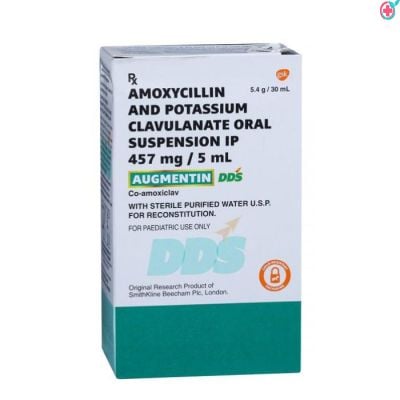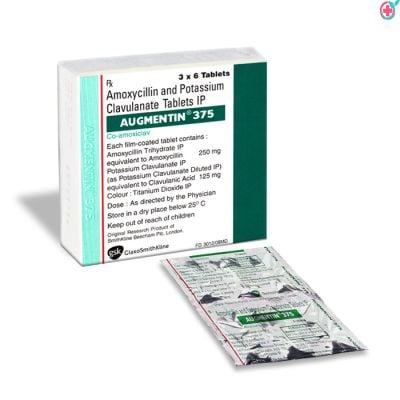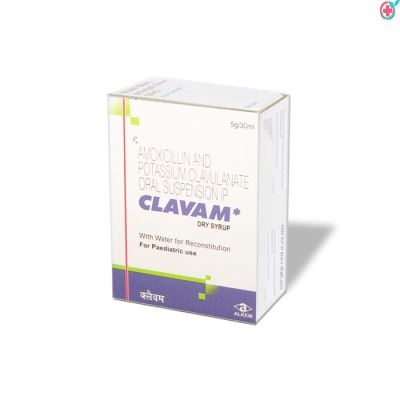
Augmentin Injection (Amoxicillin and Clavulanate Potassium) Used to Treat Bacterial Infections In Different Parts of The Body
Buy Augmentin Injection online - Augmentin Injection is used to treat bacterial infections of the ear, nose, throat, skin, bone, soft tissue, joints, urinary tract, and respiratory tract. Amoxycillin and Clavulanic Acid is an active ingredient that belongs to the group of medicines called antibiotics.


Product Overview
Augmentin Injection is a powerful broad-spectrum antibiotic used to treat a wide variety of bacterial infections involving the respiratory tract, urinary tract, skin, and soft tissues. It is particularly effective against beta-lactamase-producing organisms that have developed resistance to standard amoxicillin. By combining a penicillin-type antibiotic with a protector, this intravenous antibiotic therapy ensures high efficacy in clinical settings where rapid and reliable results are required to combat severe infections. Augmentin Injection is a combination antibiotic containing Amoxicillin and Clavulanate Potassium .
Product Composition
- Amoxicillin (as Amoxicillin Sodium): A semi-synthetic antibiotic with a broad spectrum of bactericidal activity against many gram-positive and gram-negative microorganisms.
- Clavulanic Acid (as Potassium Clavulanate): A beta-lactamase inhibitor that prevents bacteria from destroying amoxicillin, thereby extending its antibacterial range.
Product Specification
| Feature | Specification Details |
| Drug Class | Beta-lactam Antibiotic / Penicillin Combination |
| Administration Route | Intravenous (IV) Injection or Infusion |
| Dosage Forms | 600mg / 1.2g Vials |
| Storage Temperature | Store below 25°C in a dry place |
| Pharmacological Action | Bacterial Cell Wall Synthesis Inhibition |
Mechanism of Action
- Cell Wall Inhibition: The Amoxicillin component works by binding to penicillin-binding proteins (PBPs), which inhibits the final transpeccidation step of peptidoglycan synthesis in bacterial cell walls, leading to cell lysis.
- Enzyme Neutralization: Bacteria often produce beta-lactamase enzymes to deactivate antibiotics; Clavulanate Potassium binds irreversibly to these enzymes, acting as a "suicide inhibitor."
- Synergistic Effect: This combination restores the susceptibility of bacteria to amoxicillin, providing a synergistic antimicrobial effect against resistant strains.
Key Benefits
- Extended Spectrum: Highly effective against antibiotic-resistant bacteria that standard penicillins cannot treat alone.
- Rapid Systemic Absorption: As an injectable antibiotic, it provides faster peak plasma concentrations compared to oral forms, ideal for acute infection management.
- Versatile Clinical Application: Trusted for treating complex conditions like community-acquired pneumonia, intra-abdominal infections, and surgical prophylaxis.
- Proven Safety Profile: A well-documented clinical efficacy record for both adult and pediatric patients under medical supervision.
Precautions
Important Precautions Before Using Augmentin Injection
Augmentin Injection contains Amoxicillin and Clavulanate Potassium. It should be used carefully to ensure safe and effective treatment of bacterial infections.
| Condition or Situation | Precaution |
|---|---|
| Allergy to antibiotics | Avoid use if allergic to Amoxicillin, Clavulanate Potassium, penicillin, or similar antibiotics |
| Liver problems | Use carefully as the medicine may affect liver function |
| Kidney disease | Dose changes may be needed in people with kidney problems |
| Pregnancy | Use only if advised after proper medical evaluation |
| Breastfeeding | Small amounts may pass into breast milk |
| Stomach problems | Use with care if there is a history of colitis or digestive issues |
| Long term use | Extended use may increase the risk of secondary infections |
Things to Remember During Treatment
- Tell your healthcare provider about any antibiotic allergies
- Complete the full treatment course as advised
- Drink enough water during treatment
- Watch for rash, itching, swelling, or breathing problems
- Seek help if diarrhea becomes severe or lasts long
- Do not use for viral infections like cold or flu
- Share your medical history before starting treatment
Who Needs Extra Care
People with kidney disease, liver problems, weak immunity, or past stomach issues should use Augmentin Injection with extra care. Regular monitoring may be needed during treatment.
Usage
Augmentin Injection must be administered by a healthcare professional via intravenous injection or slow infusion. The recommended dosage depends on the severity of the infection, the patient's body weight, and renal function. To maintain effective serum concentration levels, doses are typically administered at 8-hour or 12-hour intervals.
Intravenous Injection: The reconstituted solution should be administered slowly over a period of 3 to 4 minutes.
Intravenous Infusion: For longer delivery, the drug can be infused over 30 to 40 minutes using compatible intravenous fluids like Normal Saline or Lactated Ringer’s solution.
Reconstitution Protocol: Use sterile water for injection to dissolve the powder; the solution should be clear and used immediately after preparation to ensure maximum drug potency.
Dose Adjustment: Patients with renal impairment require a modified dosing schedule to prevent drug accumulation and potential toxicity.
Uses
| Medical Indication | Description of Application |
| Lower Respiratory Infections | Effective for bacterial pneumonia and acute exacerbations of chronic bronchitis. |
| Urinary Tract Infections (UTI) | Targets complex infections of the bladder and kidneys caused by susceptible organisms. |
| Skin and Soft Tissue Infections | Used for severe cellulitis, animal bites, and post-operative wound infections. |
| Bone and Joint Infections | Provides deep tissue penetration for treating conditions like osteomyelitis. |
| Surgical Prophylaxis | Administered perioperatively to prevent surgical site infections during major procedures. |
Targeted Bacterial Infections
Ear, Nose, and Throat (ENT): Frequently prescribed for severe recurrent tonsillitis or acute sinusitis that has not responded to oral therapy.
Intra-abdominal Sepsis: Used in the management of peritonitis and other polymicrobial infections within the abdominal cavity.
Dental Infections: Effective against severe dental abscesses involving spreading cellulitis.
Gram-Positive & Gram-Negative Coverage: Provides a reliable antimicrobial shield against a wide array of pathogens including H. influenzae and Staphylococci.
FAQs
Q: What is Augmentin Injection?
A: A combination antibiotic of Amoxicillin (antibacterial) and Clavulanate Potassium (beta-lactamase inhibitor) given intravenously for moderate to severe bacterial infections.
Q: What is the product used for?
A: Augmentin Injection is used to treat moderate to severe bacterial infections where oral therapy is not suitable. It is prescribed when infections are serious enough to require immediate and direct delivery of the antibiotic into the bloodstream.
Q: What infections does it treat?
A: It treats respiratory tract infections (pneumonia, bronchitis), urinary tract infections, skin and soft tissue infections, bone and joint infections, intra-abdominal infections, gynecological infections, and septicemia (blood infections).
Q: How does it work?
A: Amoxicillin attacks and destroys bacterial cell walls. Clavulanate blocks beta-lactamase enzymes that would otherwise break down amoxicillin, making the combination effective against resistant bacteria.
Q: How is it given?
A: It is administered intravenously (IV) by a healthcare professional, typically every 6 to 8 hours depending on severity. Dosage is adjusted based on kidney function and patient weight.
Q: How long is the course?
A: Usually 5 to 14 days depending on the type and severity of infection. Always complete the full course as prescribed.
Q: Who should not use it?
A: Patients with a penicillin or amoxicillin allergy, those with a history of Augmentin-associated jaundice or liver problems, and patients with severe renal impairment without dose adjustment.
Q: What are the common side effects?
A: Common side effects include nausea, vomiting, diarrhea, skin rash or itching, injection site reactions, and elevated liver enzymes. Rarely, a severe allergic reaction (anaphylaxis) may occur.
Q: Is it safe in pregnancy or breastfeeding?
A: In pregnancy it is used with caution and only when clearly needed. During breastfeeding, small amounts pass into breast milk and should only be used under medical advice.
Q: Can it be used in children?
A: Yes, but the dose is weight-based and must be carefully calculated by a clinician.
Q: Can I switch from IV to oral?
A: Yes. Once the patient improves, the doctor may switch to oral Augmentin tablets to complete the course, known as step-down therapy.
Q: Does it cause antibiotic resistance?
A: Misuse or incomplete courses can contribute to resistance. Always use only as prescribed and never self-medicate.
| Manufacturer | : | Glaxo SmithKline Pharmaceuticals Ltd |
| Trade Name | : | Augmentin |
| Generic Search | : | Amoxicillin Clavulanic Acid |
| Strength | : | 250mg + 125mg, 875mg +125mg, 500mg + 125mg |
Certified Content

Dr. Priya Nair
Clinical Pharmacist & Senior Drug Information Specialist | 9 years
Pharm.D. (Doctor of Pharmacy)
Latest Products