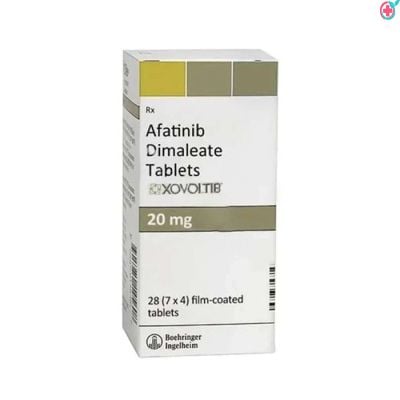
Afanat Tablet (Afatinib Dimaleate)
Afanat Tablet (Afatinib dimaleate) is an effective targeted therapy for certain lung cancers. However, it must be used carefully under oncologist supervision due to its potent effects and possible side effects.


Introduction of Afanat Tablet (Afatinib Dimaleate)
It is specifically prescribed after molecular testing confirms EGFR mutation positivity and is commonly used as a first-line or subsequent therapy in advanced lung cancer cases. Treatment with Afanat requires careful medical supervision due to its potent action and potential side effects.
Afanat Tablet contains Afatinib dimaleate, an oral targeted cancer therapy used for the treatment of metastatic or locally advanced non-small cell lung cancer (NSCLC) with activating EGFR mutations. It works by irreversibly blocking the epidermal growth factor receptor (EGFR) and related HER family proteins, which are responsible for the growth and survival of cancer cells. By inhibiting these signals, Afanat helps slow tumor progression and may improve disease control in eligible patients.
Precautions of Afanat Tablet (Afatinib Dimaleate)
- Use only under strict medical supervision
- Not recommended during pregnancy or breastfeeding
- Regular liver and lung function monitoring required
- Inform doctor if you have liver, kidney, or heart problems
- Avoid dehydration; maintain proper hydration
- Do not self-adjust dose
Uses of Afanat Tablet (Afatinib Dimaleate)
- Treatment of non-small cell lung cancer (NSCLC)
- EGFR mutation-positive lung cancer
- Used in cases where cancer has spread to other parts of the body
- Sometimes prescribed after failure of other cancer therapies
Side Effects of Afanat Tablet (Afatinib Dimaleate)
Common side effects:
- Diarrhea
- Rash or acne-like skin reactions
- Mouth sores
- Nausea and vomiting
- Loss of appetite
- Fatigue
Serious side effects:
- Severe diarrhea leading to dehydration
- Lung inflammation (interstitial lung disease)
- Liver function abnormalities
- Eye irritation or vision changes
- Severe skin reactions
FAQs of Afanat Tablet (Afatinib Dimaleate)
Q1. What is Afanat Tablet used for?
Afanat Tablet is used mainly for the treatment of non-small cell lung cancer (NSCLC) with specific EGFR gene mutations. It helps slow down or stop the growth of cancer cells.
Q2. How does Afanat Tablet work?
It works by blocking certain proteins (EGFR family) that are responsible for the growth and spread of cancer cells.
Q3. How should Afanat Tablet be taken?
It should be taken exactly as prescribed by your doctor, usually once daily on an empty stomach (at least 1 hour before or 2 hours after food).
Q4. Can Afanat Tablet be taken during pregnancy?
No, it is not recommended during pregnancy as it may harm the unborn baby. Effective contraception is advised during treatment.
Q5. What are the common side effects?
Common side effects include diarrhea, skin rash, mouth sores, nausea, and loss of appetite. Inform your doctor if symptoms become severe.
Interactions of Afanat Tablet (Afatinib Dimaleate)
Afanat Tablet may interact with:
- Strong CYP3A4 inhibitors (e.g., ketoconazole, ritonavir)
- Strong CYP3A4 inducers (e.g., rifampicin, carbamazepine)
- Acid-reducing agents (PPIs like omeprazole may affect absorption)
- Other cancer medications
- Herbal supplements (especially St. John’s Wort)
| Manufacturer | : | Natco Pharma, India |
| Trade Name | : | Gilotrif |
| Generic Search | : | Afatinib dimaleate |
| Strength | : | 20mg, 30mg, 40mg |
Certified Content

Dr. Priya Nair
Clinical Pharmacist & Senior Drug Information Specialist | 9 years
Pharm.D. (Doctor of Pharmacy)
Latest Products