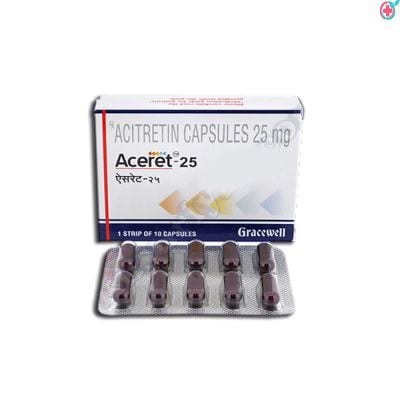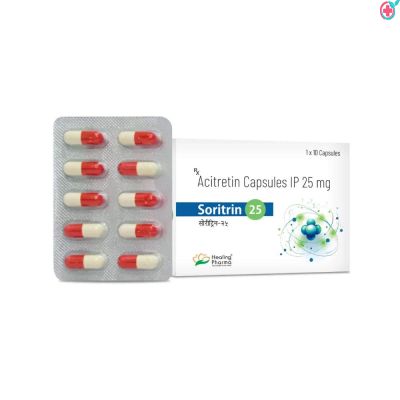
Acrotac Capsules (Acitretin 10mg) | Used to Treat Severe Psoriasis and Skin Disorders
Acrotac Capsules is used to treat serious skin disorders such as severe psoriasis (dry, scaly, wax-like skin rash). It is also used to treat keratin deposition on skin (ichthyosis), skin rash (pityriasis) or small elevations of skin and mucosa (lichen ruber).


Product Overview
Acrotac Capsules contain Acitretin, a potent retinoid derived from vitamin A. Acrotac Capsules is an oral retinoid used to treat severe psoriasis and certain skin disorders. It works by regulating skin cell growth, reducing scaling, thickness, and inflammation, and helping improve overall skin condition when taken under strict medical supervision. By regulating the growth and differentiation of skin cells, Acitretin helps normalize the skin's turnover process, effectively reducing the characteristic thickness, redness, and scaling associated with severe skin disorders. Due to its significant physiological effects and strict safety profile, Acrotac must be used under the direct supervision of a healthcare professional.
Product Composition
- Active Ingredient: Acitretin (10 mg per capsule).
- Excipients: (Formulations may vary; please refer to the specific package insert for a complete list of inactive ingredients).
Product Specification
| Feature | Details |
| Brand Name | Acrotac Capsules |
| Active Ingredient | Acitretin |
| Therapeutic Category | Systemic Retinoid (Vitamin A derivative) |
| Form | Oral Capsule |
| Primary Indications | Severe psoriasis, ichthyosis, keratosis follicularis, lichen planus |
| Storage Requirements | Store at room temperature, protected from light and moisture |
Mechanism of Action
- Cell Turnover Regulation: Acitretin acts on the skin by slowing down the abnormally rapid proliferation of skin cells and promoting normal differentiation.
- Anti-inflammatory/Anti-proliferative: Its ability to reduce excessive skin cell multiplication and suppress inflammation helps clear plaques, reduce scaling, and improve overall skin texture in chronic skin conditions.
Key Indications
- Severe Psoriasis: Indicated for severe forms of psoriasis (such as erythrodermic, pustular, or plaque psoriasis) that have not responded adequately to other conventional treatments like corticosteroids or phototherapy.
- Keratinization Disorders: Utilized for managing skin disorders characterized by abnormal keratin production and thickening, such as ichthyosis, pityriasis, and lichen planus.
Precautions
Strict Medical Supervision Required
- Acrotac Capsules (Acitretin 10mg) should be used only under a dermatologist’s supervision
- Do not start or stop without medical advice
Pregnancy Prevention (Highly Critical)
- Causes severe birth defects and must NOT be used during pregnancy
- Effective contraception is required during treatment and for a prolonged period after stopping (as advised by doctor)
- Regular pregnancy tests may be necessary
Avoid Alcohol
- Alcohol can increase the risk of side effects and prolong drug presence in the body
- Avoid alcohol during treatment and for a period after discontinuation
Liver Function Monitoring
- May affect liver function
- Regular liver tests are required during therapy
Lipid Monitoring
- Can increase cholesterol and triglyceride levels
- Periodic blood tests are necessary
Skin Sensitivity and Care
- May cause dryness and increased sensitivity
- Use moisturizers and avoid excessive sun exposure
| Precaution Area | Guidance |
|---|---|
| Usage | Only under specialist supervision |
| Pregnancy | Strictly contraindicated |
| Contraception | Mandatory during and after treatment |
| Alcohol | Avoid completely |
| Liver Health | Regular monitoring required |
| Lipids | Check cholesterol levels regularly |
Usage
Dosage & Administration
Consistency: Take Acrotac capsules exactly as prescribed by your dermatologist. Dosage is highly individualized based on your condition's severity and your response to treatment.
Intake Method: Swallow the capsule whole with a full glass of water. Taking it with a meal, particularly one containing some fat, can often improve the absorption of the medication.
Strict Adherence: Treatment requires a long-term commitment. Do not alter your dosage or stop treatment without consulting your doctor, as this may result in a relapse of your skin condition.
Missed Dose: Take the missed dose as soon as you remember. If it is nearly time for your next scheduled dose, skip the missed dose and resume your regular schedule. Do not double your dose.
Safety Precautions
Pregnancy Prevention: This is a critically important requirement. Women of childbearing age must use two highly effective, non-hormonal forms of contraception simultaneously. Contraception must begin at least one month before treatment, continue throughout, and for three full years after discontinuation.
Alcohol Prohibition: Strict avoidance of all alcohol is required during treatment and for two months following the final dose to prevent the formation of etretinate, which significantly prolongs the period of teratogenic risk.
Vision Monitoring: Be aware that this medication can cause night vision impairment. If you experience difficulty seeing at night, avoid driving or operating machinery in low-light conditions.
Routine Monitoring: Commit to scheduled visits for blood work to monitor liver enzymes (ALT/AST), cholesterol, and triglyceride levels throughout the duration of your therapy.
Treatment Administration Summary
| Protocol | Requirement |
| Frequency | Once daily (as prescribed by your dermatologist) |
| Intake Method | Oral, preferably with a meal for better absorption |
| Monitoring | Frequent blood panels (liver function and lipids) |
| Key Warning | Strict contraception and total alcohol avoidance are mandatory |
Uses
Severe Psoriasis: Management of severe, recalcitrant forms, including erythrodermic, pustular, and plaque psoriasis, when other treatments have failed.
Disorders of Keratinization: Effective for managing chronic, severe disorders such as ichthyosis, keratosis follicularis (Darier's disease), and lichen planus.
Skin Maintenance: Acts to normalize cell proliferation in conditions where skin turnover is dangerously rapid or disordered.
Side Effects
Common Side Effects
- Dry skin, lips, and eyes
- Peeling or scaling of skin
- Hair thinning or hair loss
- Itching or skin irritation
Mucosal Effects
- Dry mouth and nose
- Nosebleeds due to dryness
Metabolic Effects
- Increased cholesterol and triglyceride levels
- Changes in liver enzyme levels
Musculoskeletal Effects
- Joint or muscle pain
- Stiffness in some patients
Serious but Rare Effects
- Severe liver problems
- Vision changes or sensitivity to light
- Mood changes or depression
- Severe allergic reactions
| Side Effect Type | Details |
|---|---|
| Common Effects | Dryness, peeling, hair thinning |
| Mucosal Effects | Dry mouth, nosebleeds |
| Metabolic Effects | High cholesterol, liver changes |
| Musculoskeletal | Joint and muscle pain |
| Serious Effects | Liver issues, vision or mood changes |
FAQs
Q: What is Acrotac (Acitretin) used for?
A: Acrotac is a systemic retinoid used for the treatment of severe, resistant forms of psoriasis and other serious disorders of skin keratinization (such as ichthyosis, keratosis follicularis, and lichen planus) that have not responded to conventional therapies.
Q: Why is the pregnancy warning so long (3 years)?
A: Acitretin can be converted into etretinate in the body, especially when alcohol is consumed. Etretinate is stored in body fat and eliminated very slowly. Because of the potential for severe birth defects, it is mandatory to avoid pregnancy for at least three years after completing your final dose.
Q: Can I drink alcohol while taking Acitretin?
A: No. You must strictly avoid all alcohol consumption while on this medication and for at least two months after stopping it. Alcohol significantly increases the risk that your body will produce etretinate, which stays in your system for years and greatly increases the risk of birth defects.
Q: Why do I need regular blood tests?
A: Acitretin can affect liver enzymes, cholesterol, and triglyceride levels. Regular blood monitoring is essential to ensure your liver is functioning correctly and that your lipid levels remain within a safe range during treatment.
Q: Will this medication make my skin dry?
A: Yes, dryness is a very common side effect. You may notice dry skin, dry lips (cheilitis), and dry eyes. These are often managed with frequent application of moisturizing lotions, lip balms, and the use of lubricating eye drops.
Q: Can I donate blood while on this medication?
A: No. You must not donate blood while taking Acrotac or for at least three years after you stop taking it, as this could pose a severe danger to a pregnant recipient.
Q: Why am I having trouble seeing at night?
A: Decreased night vision is a known side effect of retinoids. If you experience difficulty seeing in low light, notify your doctor immediately and avoid driving or operating machinery at night.
Q: How do I store the capsules?
A: Store them at controlled room temperature, away from moisture and direct light, and keep them in their original packaging until you are ready to take them.
Q: What if I forget a dose?
A: If you miss a dose, take it as soon as you remember. However, if it is almost time for your next dose, skip the missed one. Do not take two doses at the same time.
Q: Can I stop taking the medication if I feel my skin has cleared up?
A: Do not stop or adjust your dose without speaking to your doctor. Acitretin treatment plans are carefully tailored to your specific condition, and abrupt cessation can sometimes lead to a rapid return of symptoms.
Interactions
Alcohol
- Strictly avoid alcohol during and after treatment
- Can convert acitretin into a longer-lasting compound, increasing risk of toxicity
Vitamin A and Retinoids
- Do not take vitamin A supplements or other retinoid medicines
- May increase risk of toxicity (hypervitaminosis A)
Tetracycline Antibiotics
- Avoid combining with tetracyclines (e.g., doxycycline, minocycline)
- May increase risk of raised intracranial pressure
Methotrexate
- Concurrent use may increase risk of liver toxicity
- Should be avoided unless strictly supervised
Phenytoin
- May affect drug levels and increase side effects
- Requires monitoring if used together
| Interaction Type | Recommendation |
|---|---|
| Alcohol | Strictly avoid |
| Vitamin A/Retinoids | Do not combine |
| Tetracyclines | Avoid combination |
| Methotrexate | Avoid due to liver risk |
| Phenytoin | Use with caution and monitoring |
| Manufacturer | : | Sun Pharma, India |
| Trade Name | : | Soriatane |
| Generic Search | : | Acitretin |
| Strength | : | 10 mg |
Certified Content

Dr. Priya Nair
Clinical Pharmacist & Senior Drug Information Specialist | 9 years
Pharm.D. (Doctor of Pharmacy)
Latest Products