

Introduction
Two little bottles. Both antibiotic eye drops. Both prescribed for eye infections. Yet using them interchangeably could be the difference between healing quickly and developing a serious complication. Here is everything you need to know.
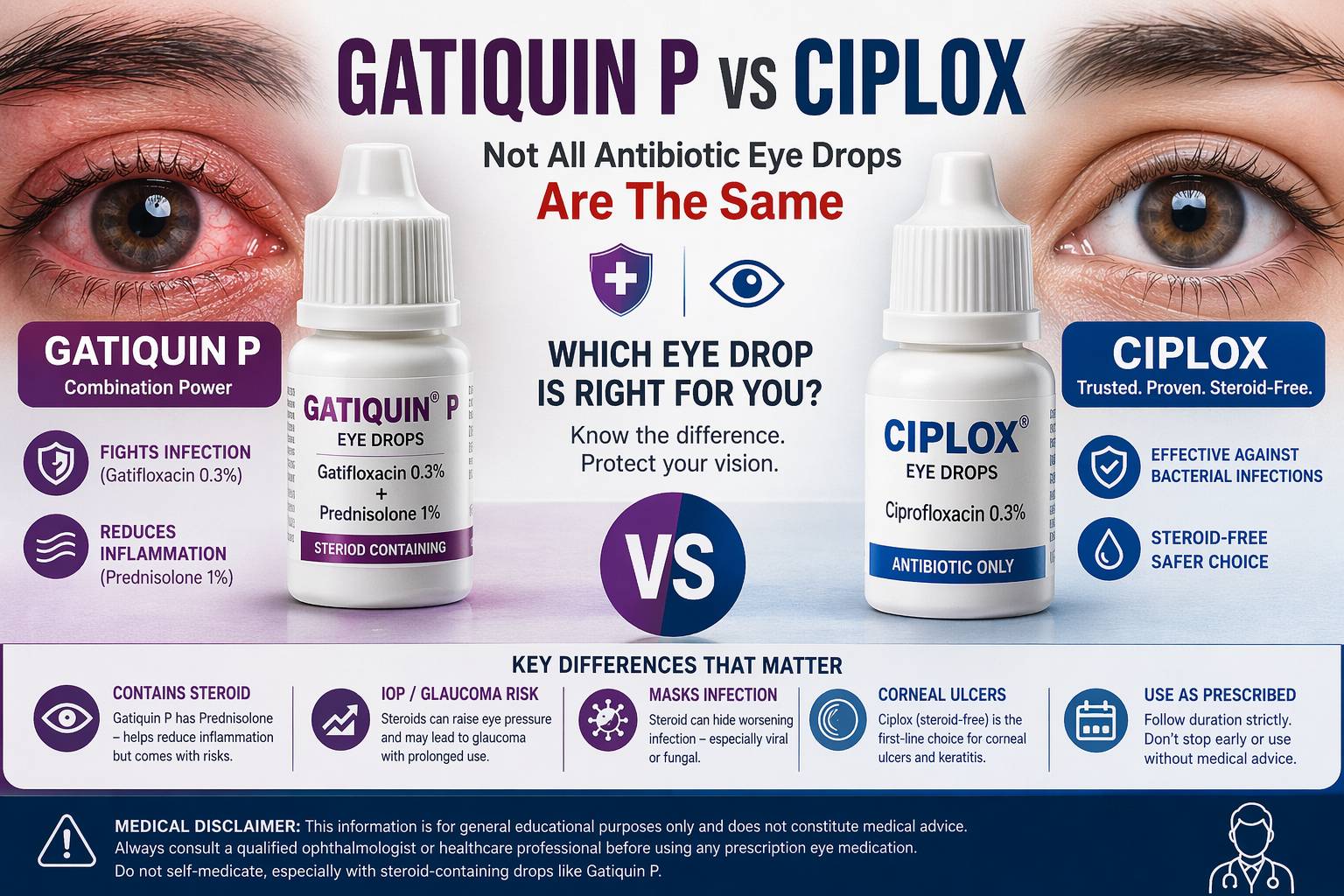
Gatiquin P and Ciplox Eye Drop both belong to the fluoroquinolone antibiotic family, yet their formulations, indications, and risks are meaningfully different. This guide breaks down those differences in plain language.
Active Ingredients
Gatiquin P
Gatiquin P is a combination eye drop containing two active components:
- Gatifloxacin 0.3% — a 4th generation fluoroquinolone antibiotic
- Prednisolone 1% — a corticosteroid (anti-inflammatory)
This dual-action formula fights infection and tames inflammation at the same time.
Ciplox
Ciplox is a single-agent eye drop containing:
- Ciprofloxacin 0.3% — a 2nd generation fluoroquinolone antibiotic
There is no steroid component. It is a pure antibiotic drop trusted for decades.
Side-by-Side Comparison
| Feature | Gatiquin P | Ciplox |
| Antibiotic | Gatifloxacin 0.3% | Ciprofloxacin 0.3% |
| Generation | 4th generation | 2nd generation |
| Contains Steroid? | Yes — Prednisolone 1% | No |
| Antibacterial Spectrum | Broader spectrum | Broad spectrum |
| Anti-inflammatory | Yes (Prednisolone) | No |
| Best For | Infection + inflammation | Pure bacterial infection |
| Corneal Ulcer Use | Use with caution | First-line choice |
| Post-Surgery Use | Commonly used | Less preferred |
| IOP / Glaucoma Risk | Yes — steroid raises IOP | Minimal |
| Masking Infection Risk | Yes — steroid can mask worsening | No such risk |
| Long-term Use | Not recommended | Safer for short-term use |
When Is Each Drop Prescribed?
Gatiquin P — When Infection Meets Inflammation
Doctors typically reach for Gatiquin P when redness, swelling, and inflammation accompany the infection:
- Bacterial conjunctivitis with marked redness and swelling
- Post-operative eye care (e.g., after cataract surgery)
- Blepharitis with an inflammatory component
- Conditions requiring both infection control and inflammation relief
- Anterior uveitis with secondary bacterial involvement
Ciplox — The Workhorse Antibiotic
Ciprofloxacin is the go-to for straightforward bacterial infections:
- Bacterial conjunctivitis (pink eye)
- Corneal ulcers — critical; steroid-free treatment is essential here
- Bacterial keratitis (infection of the cornea)
- Pre- and post-operative infection prevention
- General bacterial surface infections of the eye
The Steroid Factor: Why It Matters
The most important difference is the Prednisolone in Gatiquin P. This corticosteroid is a double-edged sword:
Risk 1: Increased Intraocular Pressure (IOP)
Steroids can raise pressure inside the eye. With prolonged use, this can silently damage the optic nerve — the same mechanism behind glaucoma. Patients with a family history of glaucoma are especially at risk.
Risk 2: Masking a Worsening Infection
Prednisolone can suppress symptoms — redness and pain — even while the underlying infection worsens. This is particularly dangerous with viral (herpes simplex) or fungal infections, which Gatiquin P does not treat.
Risk 3: Cataract Formation
Long-term steroid use in the eye is associated with posterior subcapsular cataracts. Rare with short courses but relevant if used repeatedly or for extended periods.
Ciplox’s Minor Quirk
Ciprofloxacin can occasionally leave white crystalline precipitates on the cornea during treatment of corneal ulcers. These are generally harmless and resolve on their own.
What You Should Never Do
- Never self-prescribe Gatiquin P — the steroid makes it unsuitable without a proper diagnosis
- Never use eye drops prescribed for someone else, even if symptoms look the same
- Never use Gatiquin P for a suspected viral or fungal infection — the steroid can worsen these
- Never continue drops beyond the prescribed duration without a follow-up
- Never stop either drop early because symptoms improve — this risks relapse and antibiotic resistance
Summary: Which Drop Is Right?
| Choose… | When… |
| Gatiquin P | The infection comes with significant redness, swelling, or inflammation — or you are in post-surgical recovery needing both infection control and inflammation management. |
| Ciplox | You have a straightforward bacterial infection, a corneal ulcer, or when the infection type is uncertain — Ciplox carries none of the steroid-related risks. |
Medical Disclaimer
This document is for general educational purposes only and does not constitute medical advice. Always consult a qualified ophthalmologist or healthcare professional before using any prescription eye medication. Do not self-medicate, especially with steroid-containing drops like Gatiquin P.
Also Read: Clear Vision, Healthy Eyes: The Role of Moxifloxacin in Eye Care