

- What Is Chronic Care Management (CCM)?
- Why Is Chronic Care Management Important?
- Common Chronic Conditions That Require Ongoing Management
- Key Components of an Effective Chronic Care Management Program
- How Does Chronic Care Management Work?
- Benefits of Chronic Care Management for Patients and Healthcare Providers
- The Role of Technology in Modern Chronic Care Management
- Chronic Care Management vs. Remote Patient Monitoring
- Medicare Chronic Care Management: Eligibility and Coverage
- Challenges in Implementing Chronic Care Management
- How Patients Can Participate in Their Chronic Care Management
- The Future of Chronic Care Management
- Conclusion
- Frequently Asked Questions (FAQs)
- 1. What does Chronic Care Management (CCM) mean?
- 2. Who qualifies for Chronic Care Management under Medicare?
- 3. What conditions are covered under Chronic Care Management?
- 4. What services are included in CCM?
- 5. Is Chronic Care Management the same as Remote Patient Monitoring?
- 6. Does Medicare cover Chronic Care Management?
- 7. Why is medication management important in CCM?
- 8. Can patients receive CCM services remotely?
- 9. How does technology improve chronic disease management?
- 10. Can CCM help prevent hospitalizations?
Chronic diseases are among the most significant challenges facing modern healthcare systems. Conditions such as diabetes, hypertension, cardiovascular disease, asthma, arthritis, and chronic obstructive pulmonary disease (COPD) often require ongoing medical attention, regular monitoring, lifestyle adjustments, and long-term medication management. Managing these conditions effectively involves more than occasional doctor visits. It requires a coordinated approach that addresses patients’ healthcare needs over time.
Chronic Care Management (CCM) is a healthcare approach designed to support individuals living with multiple chronic conditions through continuous care coordination, personalized treatment planning, medication management, and regular communication with healthcare professionals.
By bringing together patients, physicians, nurses, pharmacists, caregivers, and other healthcare providers, CCM helps create a more organized approach to long-term disease management. It also encourages patients to become active participants in their healthcare decisions.
This guide explores how Chronic Care Management works, its key components, benefits, challenges, and the role of technology and medication management in supporting better long-term health outcomes.
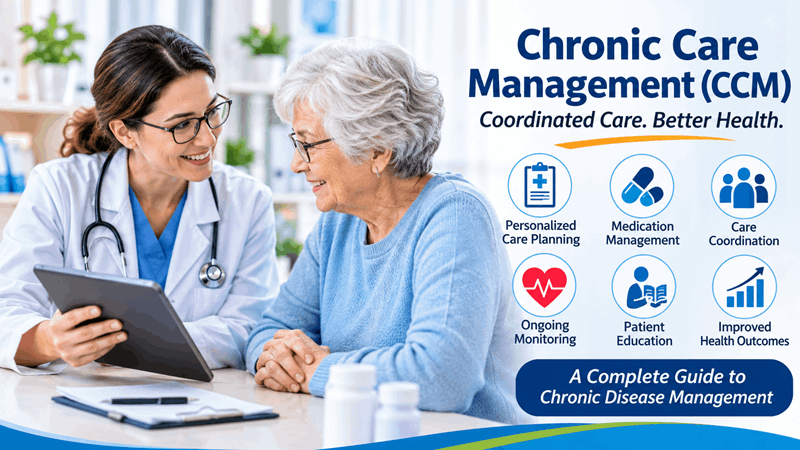
What Is Chronic Care Management (CCM)?
Chronic Care Management (CCM) refers to the ongoing coordination and management of healthcare services for individuals living with long-term medical conditions.
In the United States, the Centers for Medicare & Medicaid Services (CMS) defines Medicare CCM eligibility around patients who have two or more chronic conditions expected to last at least 12 months or until the patient’s death and that place them at significant risk of death, acute exacerbation or decompensation, or functional decline.
CCM services are generally provided outside traditional face-to-face medical appointments. They involve regular communication, care planning, medication reviews, coordination between healthcare professionals, and monitoring of a patient’s overall healthcare needs.
The primary objective is to help patients maintain continuity of care, follow appropriate treatment plans, and receive timely support throughout their healthcare journey.
Unlike episodic healthcare, which primarily focuses on treating immediate symptoms or medical emergencies, chronic care management emphasizes ongoing support and proactive disease management.
Why Is Chronic Care Management Important?
Living with a chronic disease can involve several challenges. Patients may need to manage multiple prescriptions, attend specialist appointments, monitor health indicators, and make long-term lifestyle changes.
Without proper coordination, important aspects of treatment can become difficult to manage.
For example, someone living with diabetes and hypertension may need regular blood glucose monitoring, blood pressure checks, dietary adjustments, medication management, and consultations with multiple healthcare professionals.
CCM helps organize these responsibilities through a structured care plan.
Some important reasons why chronic care management matters include:
- Better care coordination: Helps physicians, specialists, nurses, and other healthcare professionals communicate and coordinate patient care.
- Consistent medication management: Supports medication reviews, adherence, and identification of potential medication-related concerns.
- Early identification of health concerns: Encourages regular follow-ups and timely communication when a patient’s condition changes.
- Personalized healthcare planning: Organizes treatment goals according to individual medical needs and circumstances.
- Improved patient engagement: Encourages individuals to understand their conditions and participate in healthcare decisions.
- Continuity of care: Helps patients maintain communication with their healthcare team between regular appointments.
Effective CCM does not guarantee that complications or hospitalizations will be prevented. However, coordinated and proactive care can help address healthcare needs before they become more difficult to manage.
Common Chronic Conditions That Require Ongoing Management
Chronic care management can support individuals living with different long-term health conditions. The specific care plan depends on the patient’s diagnosis, medical history, risk factors, and treatment requirements.
Some commonly managed conditions include:
1. Diabetes
Diabetes requires continuous attention to blood glucose levels, nutrition, physical activity, and prescribed diabetes medication.
Chronic care management can support patients through regular follow-ups, monitoring plans, medication reviews, and education about diabetes self-management.
2. Hypertension
Hypertension, commonly known as high blood pressure, increases the risk of cardiovascular disease, stroke, and kidney complications.
Long-term management may involve blood pressure monitoring, prescribed hypertension medications, dietary improvements, physical activity, and regular medical assessments.
3. Cardiovascular Disease
Individuals living with cardiovascular conditions may require ongoing medication management, lifestyle modifications, symptom monitoring, and coordination between primary care physicians and cardiology specialists.
4. Chronic Obstructive Pulmonary Disease (COPD)
COPD is a progressive respiratory condition that can affect breathing and daily activities.
Management may include prescribed inhaled COPD medications, pulmonary rehabilitation, smoking cessation support, monitoring of respiratory symptoms, and regular clinical assessments.
5. Arthritis
Conditions such as osteoarthritis and rheumatoid arthritis can cause persistent joint pain, inflammation, and reduced mobility.
A coordinated treatment approach may involve arthritis medication management, physical therapy, pain management, and lifestyle recommendations.
6. Asthma
People with persistent asthma may require ongoing symptom assessment, prescribed controller asthma medications, rescue inhalers, and personalized action plans.
7. Other Long-Term Conditions
CCM may also support individuals living with Alzheimer’s disease and related dementias, atrial fibrillation, cancer, glaucoma, HIV/AIDS, depression, and other qualifying chronic conditions.
Eligibility for a particular CCM program depends on the applicable healthcare program and its requirements.
Key Components of an Effective Chronic Care Management Program
A successful CCM program requires coordination between patients and healthcare professionals. Several important components contribute to its effectiveness.
1. Comprehensive Patient Assessment
The first step involves understanding the patient’s overall health condition.
Healthcare professionals review medical history, existing diagnoses, medications, allergies, lifestyle factors, functional abilities, and other relevant healthcare information.
This assessment helps identify potential care gaps and establish appropriate treatment priorities.
2. Personalized Care Planning
A comprehensive care plan provides a structured framework for managing chronic conditions.
Depending on individual needs, it may include:
- Current medical conditions and health concerns.
- Treatment objectives and measurable health goals.
- Prescribed medications and medication-related considerations.
- Recommended medical appointments and follow-ups.
- Preventive healthcare activities.
- Lifestyle and self-management recommendations.
- Coordination with specialists and other healthcare providers.
The care plan should be reviewed and updated when the patient’s healthcare needs change.
3. Medication Management
Medication management is an important part of chronic disease care, particularly for individuals taking multiple medications.
Patients may experience difficulties remembering doses, understanding instructions, managing refills, or recognizing possible side effects.
Medication management activities can include:
- Reviewing current prescriptions.
- Identifying potential medication interactions.
- Checking medication adherence.
- Coordinating prescription changes with healthcare providers.
- Educating patients about appropriate medication use.
- Supporting timely prescription refills.
Patients should consult their prescribing healthcare professionals or pharmacists before changing, stopping, or combining medications.
4. Regular Patient Communication
Ongoing communication helps healthcare professionals understand how patients are responding to their treatment plans.
Communication may take place through telephone calls, secure messaging, scheduled check-ins, or other appropriate channels.
Regular follow-ups can help identify new symptoms, medication-related problems, difficulties following treatment recommendations, and changes in overall health.
5. Care Coordination Between Healthcare Professionals
Patients with multiple chronic conditions often receive treatment from several specialists.
CCM helps coordinate communication between primary care providers, specialists, pharmacists, nursing teams, and other relevant healthcare professionals.
Better coordination can reduce fragmented care and help ensure that important medical information is available to the appropriate members of the healthcare team.
6. Patient Education and Self-Management
Patients play an essential role in managing their long-term health.
Healthcare professionals can provide education about disease progression, medication instructions, nutrition, physical activity, symptom recognition, and preventive healthcare.
The goal is to help patients make informed decisions and follow their treatment plans with greater confidence.
How Does Chronic Care Management Work?
A typical chronic care management process involves several stages.
Step 1: Patient Identification and Eligibility Assessment
Healthcare providers identify patients who may benefit from ongoing chronic care management and determine whether they meet the applicable program requirements.
Step 2: Initial Consultation and Patient Consent
The healthcare provider discusses the CCM service, its benefits, applicable costs, and how care coordination will work. For Medicare CCM, patient consent must be obtained and documented before services begin.
Step 3: Comprehensive Care Plan Development
The care team develops a personalized care plan based on the patient’s medical history, current conditions, treatment requirements, and health goals.
Step 4: Ongoing Care Coordination
Healthcare professionals coordinate appointments, review medications, communicate with other providers, and help patients address ongoing healthcare needs.
Step 5: Monitoring and Follow-Up
Regular communication and monitoring help identify changes in the patient’s condition and determine whether the care plan requires adjustments.
Step 6: Care Plan Review and Improvement
The care team periodically reviews the patient’s progress and updates the care plan according to evolving medical needs.
Benefits of Chronic Care Management for Patients and Healthcare Providers
CCM offers potential advantages for both patients and healthcare organizations when implemented effectively.
Benefits for Patients
- Better coordination between healthcare providers.
- More consistent communication with the care team.
- Improved understanding of chronic health conditions.
- Support with medication adherence and prescription management.
- Personalized healthcare goals.
- Better access to ongoing care coordination.
- Greater involvement in healthcare decisions.
Benefits for Healthcare Providers
- More structured patient care processes.
- Improved visibility into patients’ ongoing healthcare needs.
- Better coordination between primary care and specialist services.
- Opportunities to identify gaps in patient care.
- More organized medication and treatment reviews.
- Improved documentation and continuity of care.
For healthcare organizations, a well-designed CCM program can also support more proactive population health management and organized delivery of long-term healthcare services.
The Role of Technology in Modern Chronic Care Management
Healthcare technology is changing how chronic diseases are monitored and managed.
Digital healthcare platforms allow providers to organize patient information, coordinate services, communicate with patients, and monitor relevant health indicators.
Several technologies are becoming increasingly important in CCM programs.
Electronic Health Records (EHRs)
Electronic Health Records help healthcare professionals maintain organized patient information, including diagnoses, medications, allergies, and treatment history.
Access to accurate and updated medical records supports more informed care coordination.
Telehealth and Virtual Care
Telehealth enables patients to communicate with healthcare professionals remotely through approved digital platforms.
Virtual consultations and secure communication tools can make certain healthcare services more accessible, particularly for patients who experience mobility or transportation difficulties.
Remote Patient Monitoring (RPM)
Remote Patient Monitoring involves collecting health-related information using connected medical devices.
Depending on the patient’s condition, monitoring may include blood pressure, blood glucose, oxygen saturation, or weight.
Healthcare professionals can use relevant information to evaluate changes and determine whether additional clinical attention is necessary.
Artificial Intelligence and Healthcare Analytics
Artificial intelligence and data analytics may help healthcare organizations identify patterns, organize patient information, support risk assessment, and improve administrative workflows.
However, AI-generated insights should support rather than replace clinical judgment. Patient privacy, data accuracy, security, and appropriate clinical oversight remain essential.
Chronic Care Management vs. Remote Patient Monitoring
CCM and Remote Patient Monitoring are related healthcare services, but they serve different purposes.
| Feature | Chronic Care Management (CCM) | Remote Patient Monitoring (RPM) |
|---|---|---|
| Primary focus | Ongoing care coordination | Remote collection of health data |
| Main activities | Care planning, communication, coordination, and follow-ups | Monitoring health measurements using connected devices |
| Patient interaction | Regular care management communication | Monitoring and review of transmitted health information |
| Technology | EHRs, communication platforms, and care management systems | Connected medical devices and monitoring platforms |
| Overall objective | Support coordinated long-term healthcare | Help monitor relevant health indicators remotely |
CCM and RPM may complement each other when clinically appropriate and when applicable program requirements are satisfied. They are not interchangeable services.
Medicare Chronic Care Management: Eligibility and Coverage
In the United States, Medicare provides coverage for eligible Chronic Care Management services under the Medicare Physician Fee Schedule, subject to applicable requirements.
Generally, Medicare CCM eligibility requires:
- Two or more chronic conditions.
- Conditions expected to last at least 12 months or until the patient’s death.
- Conditions that place the patient at significant risk of death, acute exacerbation or decompensation, or functional decline.
Before CCM services begin, Medicare generally requires an initiating visit for new patients or patients who have not been seen by the billing practitioner within the previous year, subject to applicable exceptions.
Patients must also provide documented consent after receiving information about the service, including applicable cost-sharing responsibilities and their right to stop participating.
For standard Medicare CCM services, the required monthly time depends on the billing service. For example, CPT code 99490 generally requires at least 20 minutes of clinical staff time directed by a physician or other qualified healthcare professional during a calendar month. Complex CCM services have additional requirements.
Important: Medicare coverage, billing codes, patient eligibility, and out-of-pocket costs depend on the specific service and circumstances. Patients should confirm coverage and potential cost-sharing with their healthcare provider and Medicare plan.
Challenges in Implementing Chronic Care Management
Although CCM offers important opportunities to improve care coordination, healthcare organizations may face operational challenges.
Some common challenges include:
Patient Engagement: Patients may struggle to maintain regular communication or consistently follow treatment recommendations.
Medication Adherence: Complex medication schedules, costs, and side effects can make long-term medication management difficult.
Fragmented Healthcare Information: Medical records spread across different healthcare organizations can complicate coordination.
Technology Adoption: Some patients may have limited access to digital devices, reliable internet, or the technical knowledge required to use virtual healthcare platforms.
Data Privacy and Security: Healthcare organizations must protect sensitive patient information and comply with applicable privacy and security regulations.
Resource Requirements: Effective CCM requires trained personnel, organized workflows, appropriate documentation, and reliable communication systems.
Addressing these challenges requires patient-centered processes, appropriate technology, healthcare professional training, and continuous program evaluation.
How Patients Can Participate in Their Chronic Care Management
Patients are important partners in managing chronic conditions. Their involvement can help healthcare professionals develop more effective and realistic care plans.
Here are some practical recommendations:
- Maintain an updated list of all medications, supplements, and known allergies.
- Follow prescribed medication instructions and discuss any difficulties with a healthcare professional.
- Attend recommended medical appointments and follow-up consultations.
- Monitor relevant health indicators as recommended by the treating physician.
- Report new symptoms, unexpected side effects, or changes in health.
- Follow appropriate nutrition, physical activity, and lifestyle recommendations.
- Ask questions when treatment instructions or medication schedules are unclear.
- Keep copies of relevant medical records and test results when appropriate.
- Involve trusted caregivers when additional support is needed.
- Discuss healthcare goals and treatment concerns openly with the care team.
Taking an active role in healthcare decisions can help patients better understand their conditions and participate in long-term disease management.
The Future of Chronic Care Management
The demand for coordinated chronic disease management is expected to remain an important priority for healthcare systems as populations age and the prevalence of long-term medical conditions continues to challenge healthcare delivery.
Future CCM programs may increasingly combine digital health platforms, remote monitoring, predictive analytics, patient engagement tools, and personalized care coordination.
Healthcare providers may also place greater emphasis on integrating primary care, specialty services, pharmacy support, and community-based resources.
However, successful chronic care management will continue to depend on more than technology. Consistent communication, appropriate clinical oversight, patient participation, and individualized care planning will remain fundamental.
Conclusion
Chronic Care Management is an important approach to supporting individuals living with multiple long-term health conditions. Through coordinated care planning, medication management, regular communication, patient education, and collaboration between healthcare professionals, CCM helps organize the complex requirements of ongoing healthcare.
As healthcare systems continue to adopt digital solutions and more integrated care models, chronic care management can play an increasingly important role in supporting continuity of care and patient engagement.
For patients, understanding their conditions, following prescribed treatment plans, and maintaining communication with healthcare professionals are essential parts of long-term health management.
For healthcare organizations, investing in structured, patient-centered care coordination can help address fragmented healthcare delivery and support more comprehensive management of chronic conditions.
At OnlineGenericMedicine, we recognize the importance of medication awareness, responsible medicine use, and access to reliable healthcare information. Our goal is to help readers better understand healthcare topics and make informed decisions in consultation with qualified healthcare professionals.
Frequently Asked Questions (FAQs)
1. What does Chronic Care Management (CCM) mean?
Chronic Care Management refers to the ongoing coordination of healthcare services for individuals living with long-term medical conditions. It involves personalized care planning, regular communication, medication management, and coordination between healthcare professionals.
2. Who qualifies for Chronic Care Management under Medicare?
Generally, Medicare CCM is available to eligible beneficiaries with two or more chronic conditions expected to last at least 12 months or until death and that place them at significant risk of death, acute exacerbation or decompensation, or functional decline.
3. What conditions are covered under Chronic Care Management?
Examples include diabetes, hypertension, cardiovascular disease, COPD, asthma, arthritis, Alzheimer’s disease, atrial fibrillation, and certain other chronic conditions. Eligibility depends on individual medical circumstances and applicable program requirements.
4. What services are included in CCM?
CCM may include comprehensive care planning, medication reviews, care coordination, patient communication, health education, follow-up support, and coordination during healthcare transitions.
5. Is Chronic Care Management the same as Remote Patient Monitoring?
No. CCM primarily focuses on ongoing care coordination, while RPM focuses on collecting and reviewing health information through connected medical devices. The services may complement each other when appropriate.
6. Does Medicare cover Chronic Care Management?
Yes. Medicare Part B covers eligible CCM services under applicable Medicare Physician Fee Schedule requirements. Patients may have cost-sharing responsibilities depending on their coverage.
7. Why is medication management important in CCM?
Medication management helps patients and healthcare professionals review prescriptions, identify potential medication-related concerns, support adherence, and coordinate treatment changes when necessary.
8. Can patients receive CCM services remotely?
Yes. Many CCM activities are provided outside face-to-face appointments through telephone communication, secure messaging, and other appropriate communication methods.
9. How does technology improve chronic disease management?
Digital health platforms, electronic health records, telehealth, and remote monitoring tools can support communication, data management, patient engagement, and coordination between healthcare professionals.
10. Can CCM help prevent hospitalizations?
Proactive care coordination may help identify health concerns earlier and support timely intervention. However, CCM cannot guarantee the prevention of hospitalizations or disease complications.
Medical Disclaimer: This article is intended for educational and informational purposes only. It does not constitute medical advice, diagnosis, or treatment recommendations. Always consult a qualified healthcare professional regarding chronic conditions, prescription medications, and individual treatment decisions.
Reference: