

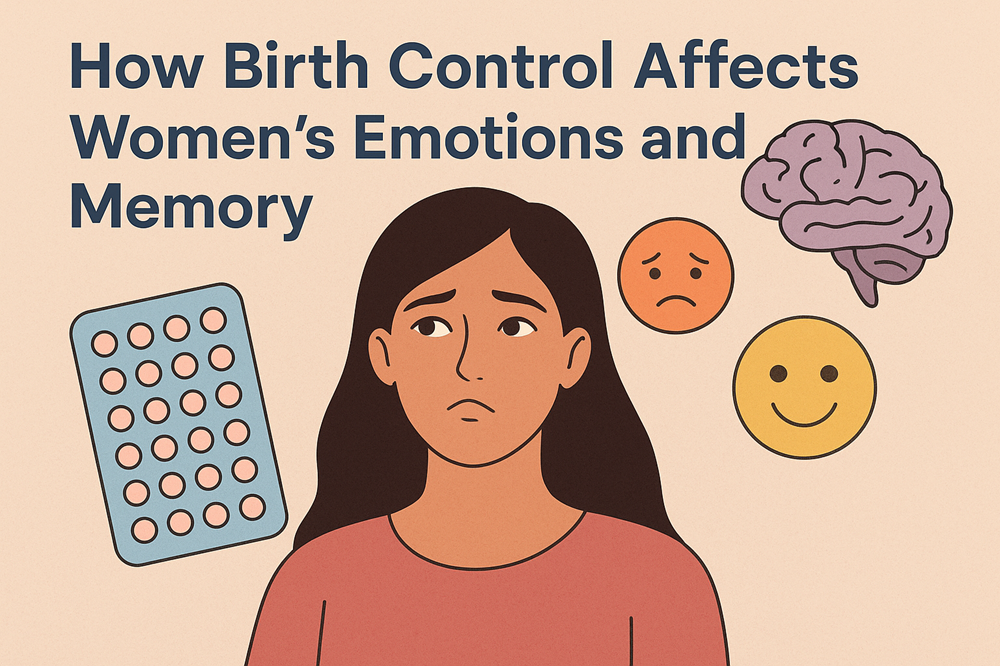
For decades, hormonal birth control has been one of the most commonly used medical innovations in women’s health. In the U.S. alone, more than 60 million women have relied on methods like birth control pills, IUDs, patches, or injections. While these medications are well known for preventing pregnancy and managing conditions like endometriosis and polycystic ovary syndrome (PCOS), science is beginning to uncover another layer of impact—one that goes beyond physical health and fertility.
Emerging research shows that hormonal contraceptives may influence how women process emotions and recall emotional events. This means the pill (and other hormonal methods) may not only affect the ovaries and menstrual cycles but also subtly shape the brain and emotional wellbeing.
The Overlooked Connection Between Hormones and the Brain
Most people associate birth control with physical changes—lighter periods, reduced cramps, regulated cycles. But hormones are powerful chemical messengers, and they influence far more than reproduction. Estrogen and progesterone, the two hormones most often regulated by contraceptives, also interact with areas of the brain responsible for mood, memory, and emotional regulation.
That’s why some women on birth control report feeling different emotionally—sometimes calmer, sometimes more anxious, sometimes more prone to mood swings. Until recently, much of this was anecdotal. But new studies are offering scientific evidence that these emotional shifts may be directly linked to the way hormonal contraceptives affect the brain.
What the Latest Research Reveals
A recent study conducted at Rice University and published in the journal Hormones and Behavior explored how birth control might influence not only emotional experiences in the moment but also how women remember those experiences later on.
Study Design
Researchers divided participants into two groups:
- Women using hormonal contraceptives (pills, IUDs, etc.)
- Women with natural menstrual cycles (not on hormonal contraception)
Both groups viewed a mix of positive, negative, and neutral images while being asked to apply different emotional regulation strategies:
- Distancing – taking a step back and creating emotional space from the experience
- Reinterpretation – changing the perspective or meaning of what they were seeing
- Immersion – fully engaging with and feeling the emotion in the moment
Later, they were given memory tests about the images.
Key Findings
- Stronger Emotional Reactions
Women on hormonal contraceptives reacted more intensely to the images than those not using them. - Fading Negative Details
When using strategies like distancing or reinterpretation, women on hormonal contraceptives remembered fewer details from negative images. While they still recalled the general events, the specifics tended to fade. - Positive Memories Stay Bright
Both groups remembered happy and positive moments more vividly, especially when they immersed themselves in the emotions.
These findings suggest that hormonal contraceptives may help women “let go” of unpleasant experiences while allowing positive ones to remain stronger in memory—a fascinating possibility that could have implications for mental health.
Why This Matters for Mental Wellbeing
Emotional regulation and memory are closely linked to conditions like anxiety and depression. For example, people who replay negative memories in detail are more vulnerable to depressive symptoms. If hormonal birth control helps reduce the intensity of negative memories, it could act as a buffer against emotional distress.
On the flip side, some women may experience the opposite—intensified mood swings or feelings of emotional disconnection—depending on how their brain responds to synthetic hormones.
This duality is important: birth control may be protective for some women’s mental health, while potentially challenging for others.
Does Birth Control Affect More Than Periods and Pregnancy?
The short answer is yes. Hormonal contraceptives don’t just regulate fertility—they also influence neurobiology. Estrogen and progesterone interact with areas of the brain such as the:
- Amygdala (emotional processing)
- Hippocampus (memory formation)
- Prefrontal cortex (decision-making and regulation)
By altering natural hormone cycles, contraceptives may shift how these brain regions function. This explains why some women feel more emotionally stable on birth control, while others may feel “off” or different.
Future Research Directions
The Rice University researchers emphasized that this is only the beginning. They plan to expand studies in three major ways:
- Examining how natural hormonal fluctuations across the menstrual cycle impact memory and mood
- Comparing the effects of different contraceptives (e.g., pill vs. IUD vs. implant)
- Including larger and more diverse groups to see whether results hold across ages, ethnicities, and health backgrounds
The goal is to provide women with clear, evidence-based insights about how hormonal birth control may affect not just fertility but also the brain and emotional health.
What Women Should Consider Before Starting Birth Control
If you are thinking about starting or switching hormonal contraceptives, it’s important to consider both the physical and emotional dimensions. Here are a few takeaways:
- Track your mood and memory. If you notice patterns—such as feeling more irritable, forgetful, or emotionally distant—it may be linked to your birth control.
- Don’t ignore emotional changes. Mood swings, depression, or anxiety are real side effects for some women. Discuss them with your healthcare provider.
- Not all methods are the same. Pills, IUDs, injections, and patches can affect the body differently. Sometimes switching methods can help.
- Look at the positives. For many women, birth control may actually support mental health by reducing negative emotional memories and allowing positive ones to shine.
Final Thoughts
Hormonal birth control has transformed women’s health by offering reliable contraception and relief from painful conditions like PCOS and endometriosis. But its influence doesn’t stop there. Research now shows it may also shape how women process emotions and recall memories—possibly making it easier to let go of negative experiences while holding on to the positive ones.
Understanding these effects can empower women to make more informed, personalized decisions about their reproductive and mental health. If you experience changes in mood, memory, or emotions on birth control, know that you’re not alone—and that science is beginning to explain why.