

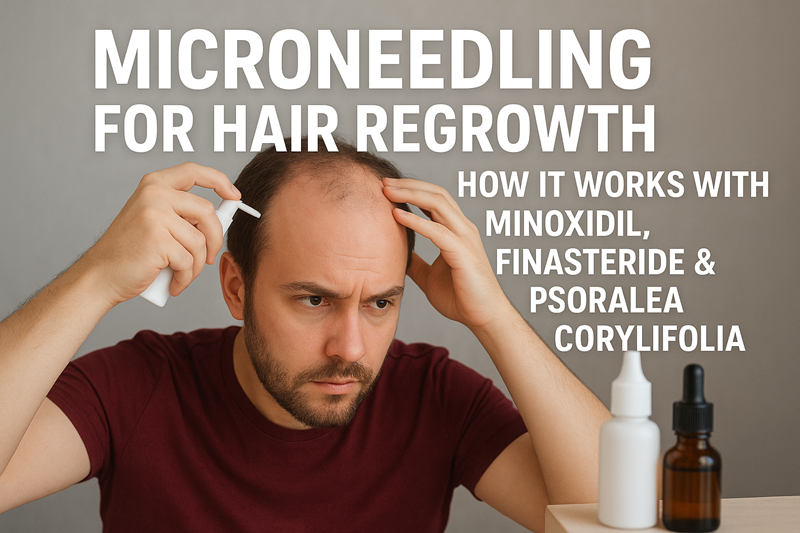
Hair loss affects millions worldwide, impacting confidence and quality of life. While medications like Minoxidil and Finasteride have long been popular, microneedling is emerging as a powerful complementary treatment for promoting natural hair regrowth.
But how do these treatments work together? And what about herbal remedies like Psoralea corylifolia (Babchi or Jamagota)? Let’s explore the science, benefits, and best practices for combining these methods safely and effectively.
What Is Microneedling for Hair?
Microneedling, or collagen induction therapy, involves using a roller or pen fitted with fine needles to create tiny punctures on the scalp. These micro-injuries stimulate the body’s healing response, triggering the release of growth factors that support new hair development.
How Microneedling Promotes Hair Growth
- Activates stem cells in hair follicles
- Increases blood flow and nutrient delivery
- Enhances collagen and elastin production
- Improves absorption of topical hair treatments like Minoxidil and Finasteride
In short, microneedling helps reactivate dormant follicles and makes your scalp more receptive to hair-growth medications.
Microneedling + Minoxidil: A Proven Combination
Minoxidil is a topical solution that widens blood vessels and increases oxygen flow to the scalp. It prolongs the anagen (growth) phase of the hair cycle, leading to thicker and denser hair.
When combined with microneedling:
- The microchannels enhance Minoxidil penetration into deeper scalp layers.
- Clinical studies show up to 3x better hair growth compared to Minoxidil alone.
- Users often report visible results in 8–12 weeks with consistent use.
✅ Tip: Apply Minoxidil 24 hours after microneedling to minimize irritation and maximize absorption.
Finasteride: Oral and Topical Options
1. Oral Finasteride (Tablet)
Oral Finasteride 1 mg is an FDA-approved medication for male pattern baldness. It works by blocking 5-alpha-reductase, the enzyme that converts testosterone to DHT (dihydrotestosterone) — the primary hormone responsible for hair follicle shrinkage.
Benefits
- Clinically proven to reduce DHT by up to 70% in the scalp
- Slows down hair loss and promotes hair regrowth, especially in the crown area
- Works best when combined with Minoxidil or microneedling for comprehensive results
Possible Side Effects
Some users experience mild hormonal effects such as:
- Decreased libido
- Erectile dysfunction
- Mood changes
These side effects are rare and often reversible after discontinuation. Always consult a healthcare provider before starting oral Finasteride.
2. Topical Finasteride
Topical Finasteride provides a targeted approach by delivering the medication directly to the scalp.
It reduces DHT levels locally while minimizing systemic absorption — making it a safer option for those concerned about side effects.
When combined with microneedling:
- Improves penetration of Finasteride into follicle roots
- Enhances effectiveness without increasing systemic exposure
- Works synergistically with Minoxidil for maximum results
🧠 Pro tip: Use either oral or topical Finasteride — not both — to avoid excessive DHT suppression.
Psoralea corylifolia (Babchi / Jamagota): The Herbal Alternative
Psoralea corylifolia, also known as Babchi or Jamagota, is an Ayurvedic herb known for its skin-healing and pigmentation properties. Some herbal practitioners recommend its oil for scalp and hair care.
Potential Benefits
- Improves scalp circulation
- Nourishes hair roots
- May support follicle stimulation naturally
Caution
The main compound, psoralen, is photosensitizing, meaning it increases skin sensitivity to light.
Direct or undiluted use can lead to:
- Burns or irritation
- Hyperpigmentation
- Allergic reactions
Always dilute Babchi oil with a carrier oil (like coconut oil), and avoid use with microneedling — the open microchannels can amplify irritation or cause chemical burns.
Comparing Hair Regrowth Treatments
| Treatment | Mechanism | Strengths | Side Effects / Risks |
|---|---|---|---|
| Microneedling | Stimulates growth factors & collagen | Improves absorption, reactivates follicles | Redness, mild irritation |
| Minoxidil | Increases blood flow & prolongs anagen phase | Clinically proven regrowth | Itching, temporary shedding |
| Finasteride (Oral) | Blocks DHT formation | Reduces hormonal hair loss | Mild hormonal side effects |
| Finasteride (Topical) | Lowers scalp DHT locally | Fewer systemic effects | Mild irritation |
| Psoralea corylifolia | Herbal scalp nourishment | Traditional use | Skin sensitivity, burns |
Recommended Hair Regrowth Routine
Weekly Routine Plan:
- Microneedling: Once every 7–10 days (0.5–1.0 mm needle depth).
- Minoxidil: Apply daily (skip on microneedling day; resume 24 hours later).
- Finasteride (oral or topical): Use daily as prescribed by your dermatologist.
- Avoid Babchi oil immediately before or after microneedling.
- Diet & lifestyle: Include biotin, zinc, and protein-rich foods to support regrowth.
Consistency, cleanliness, and patience are key — visible improvement usually appears within 3–4 months.
Final Thoughts
Microneedling, when combined with Minoxidil and Finasteride, offers one of the most effective modern strategies for reversing hair loss.
Microneedling enhances the absorption and performance of both topical and oral medications, while stimulating your scalp’s natural repair system.
Oral Finasteride works at the hormonal level, topical Finasteride targets the scalp locally, and Minoxidil supports circulation and follicle growth.
As for Psoralea corylifolia, it may offer some traditional benefits but should be used cautiously and never with microneedling.
✨ A healthy scalp, balanced hormones, and consistent care — that’s the real formula for stronger, fuller hair.
Disclaimer
This content is for informational purposes only and does not replace medical advice. Always consult a dermatologist before starting Finasteride, Minoxidil, or microneedling treatments.
Also Read: Aloe Vera vs. Amla: Which is the Better Choice for Hair Growth?