

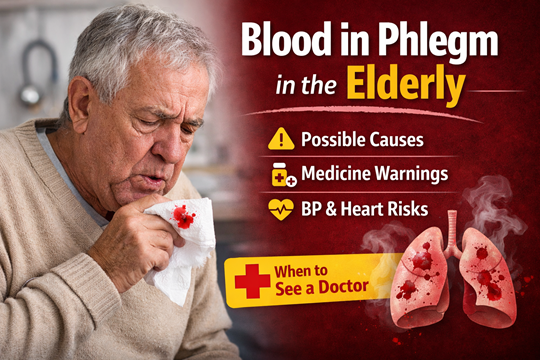
Seeing blood in phlegm can be frightening—especially when it happens in an elderly person. Even if it occurs just once, coughing up blood (medically called hemoptysis) in someone aged 60 or above should never be taken lightly.
This article explains possible causes, common mistakes, medicine cautions, and when to see a doctor immediately.
What Does Blood in Phlegm Mean?
Blood in phlegm can appear as:
- Small red streaks
- Pink-tinged sputum
- Occasionally darker clots
In older adults, even a single episode requires medical evaluation because age increases the risk of serious underlying conditions.
Possible Causes of Blood in Phlegm
Some causes are mild, while others can be serious:
Less serious causes
- Forceful or repeated coughing
- Throat irritation or infection
- Dry air or inflamed airways
- Mild bronchitis
Serious causes (more common in elderly)
- Pneumonia or chest infection
- Tuberculosis (TB)
- Chronic bronchitis or COPD
- Lung cancer
- Heart valve disease
- Blood clots in the lungs
It is not possible to know the cause without medical tests.
“It Happened Only Once” — Is It Still Serious?
Yes.
While one-time blood can sometimes come from a small burst blood vessel due to coughing, doctors do not ignore even a single episode in elderly patients.
A chest X-ray is usually advised, even if symptoms improve.
Common Home Treatments — What’s Safe and What’s Not
Sinarest and Similar Cold Tablets
- Often contain decongestants
- Can raise blood pressure
- Can cause dryness and throat irritation
- Not recommended for elderly or BP patients without doctor advice
Antibiotics like Azithromycin
- Should never be started without a doctor’s prescription
- Not useful for viral coughs
- Can cause heart rhythm problems in elderly patients, especially those with BP or heart disease
Betadine Gargle (Povidone-Iodine)
- Can help with throat infection
- Use gently, once or twice a day only
- Avoid vigorous gargling
Cough Syrups
- Simple expectorants are generally safer
- Avoid syrups with codeine or decongestants unless prescribed
Is Eating Curd Bad During a Cough?
This belief comes mainly from traditional medicine.
- Curd does not cause mucus
- But it can make the throat feel more congested
- Cold curd may worsen coughing in some people
During cough or chest symptoms, especially in elderly people, it’s better to:
- Avoid cold dairy
- Prefer warm, easily digestible foods
When to Go to the Hospital Immediately
Seek urgent medical help if:
- Blood appears again
- The amount increases
- There is breathlessness or chest pain
- Fever, weight loss, or night sweats occur
- The person feels weak, dizzy, or confused
What Doctors Usually Check
A doctor may recommend:
- Chest X-ray or CT scan
- Blood tests
- Sputum examination
- Oxygen levels
- Heart evaluation (if BP or heart disease is present)
These tests help rule out serious conditions early—when treatment works best.
Key Takeaways
- Blood in phlegm is never “normal” in elderly people
- One-time bleeding still needs medical review
- Avoid self-medication, especially antibiotics
- BP patients need extra caution with cold and cough medicines
- Early evaluation can prevent serious complications
Final Advice
If you notice blood in phlegm in an older family member, don’t panic—but don’t ignore it either. A timely doctor visit can make all the difference.