

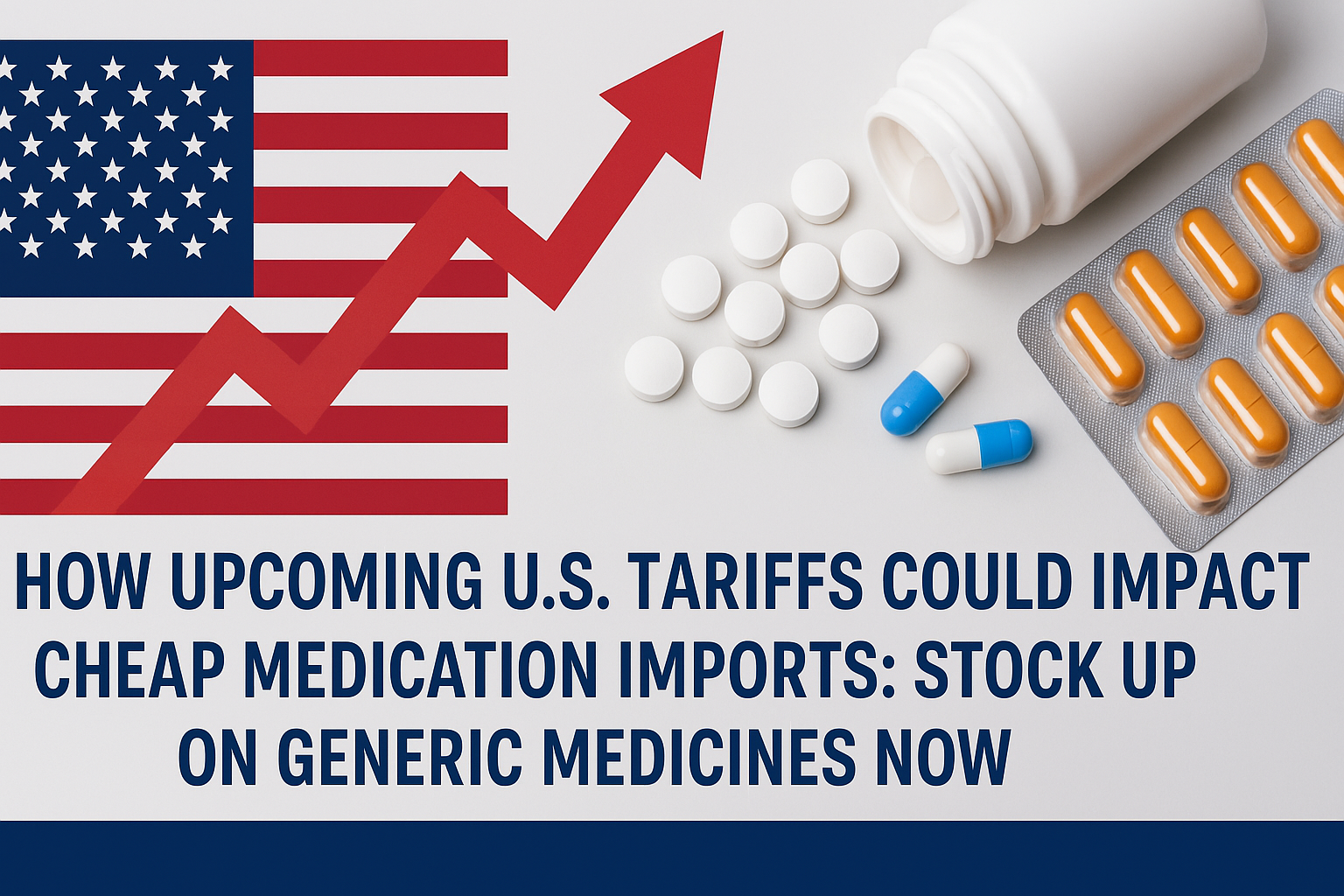
Following the latest executive order from former President Donald Trump, which imposed sweeping global tariffs, a wave of concern has swept across the U.S. consumer base. Shoppers are hastily buying up essentials—foreign foods, electronics, apparel, and more—in anticipation of price hikes. However, one crucial area is often overlooked: personal medication imports. Americans should act now to secure their affordable prescriptions from overseas before the policy shifts cause chaos.
De Minimis Exemption: A Crucial Lifeline Under Threat
Millions of Americans rely on international e-commerce platforms like OnlineGenericMedicine.com to purchase essential medications at lower costs. These platforms utilize what’s called the de minimis exemption—an allowance that lets lower-value parcels enter the U.S. by mail without being subject to import tariffs. This exemption has been vital in making global medicines accessible and affordable for many.
However, this safety net is now in jeopardy. The U.S. administration has already revoked the de minimis exemption for mail shipments from China, with plans underway to extend the policy to the rest of the world. Once implemented, this change will expose personal medication shipments to tariffs, inflate prices, and strain an already overburdened mail and customs infrastructure.
Impending Delays and Cost Hikes
The potential fallout is twofold. Not only will Americans likely pay more for medications due to the newly imposed duties, but inefficiencies in the collection of these tariffs may also result in significant delays. Without a well-established system for managing small, low-value parcel imports, the U.S. Customs process could become bogged down, causing long clearance times and disrupted delivery schedules.
Time is of the essence. With every country now subject to tariffs and with the administration signaling its intention to remove the de minimis exemption globally, medication shipments—especially those from Canada—are no longer safe from these new barriers.
The Misconception About Pharmaceutical Exemptions
Some may have heard that pharmaceuticals are excluded from these new tariffs. While that’s partly true, there’s a critical catch: most medications shipped from Canadian pharmacies are not actually manufactured in Canada. Since they are made for the Canadian market but sourced globally, they fall outside the protections of the Canada-U.S. free trade agreement. Thus, even if the word “pharmaceuticals” appears on the exemption list, your specific medication might not be protected.
Additionally, the recent order covering mail shipments from China applies to all goods, pharmaceuticals included. If the upcoming worldwide order follows the same template, then most personal medication imports will be hit hard.
The Clock Is Ticking
This is why consumers are being urged to stock up immediately. If you currently have a prescription on file, you can request that it be filled to its full authorized quantity. If not, now is the time to reach out to your physician or let OnlineGenericMedicine.com contact them on your behalf. Acting swiftly may save you from paying significantly more—or waiting significantly longer—for the same medications in the near future.
High Demand, Limited Time
At Online Generic Medicine, we are already experiencing a surge in demand, working overtime to fulfill a growing number of orders from concerned customers. Due to high call volumes, we encourage customers to place orders directly through our website. If you need to contact us and phone wait times are longer than usual, feel free to email us at [email protected], and our team will respond promptly.
Bottom Line: The global shift in U.S. trade policy is moving quickly, and its impact on personal medication imports may be just around the corner. Don’t wait until it’s too late—order your prescriptions now while prices are still low and shipping channels remain open.
Also Read: Impact of U.S. Tariffs on Generic Medicines: Challenges and Strategies for Affordable Healthcare